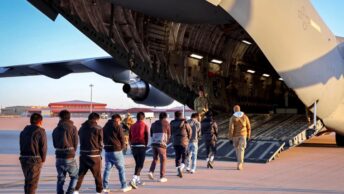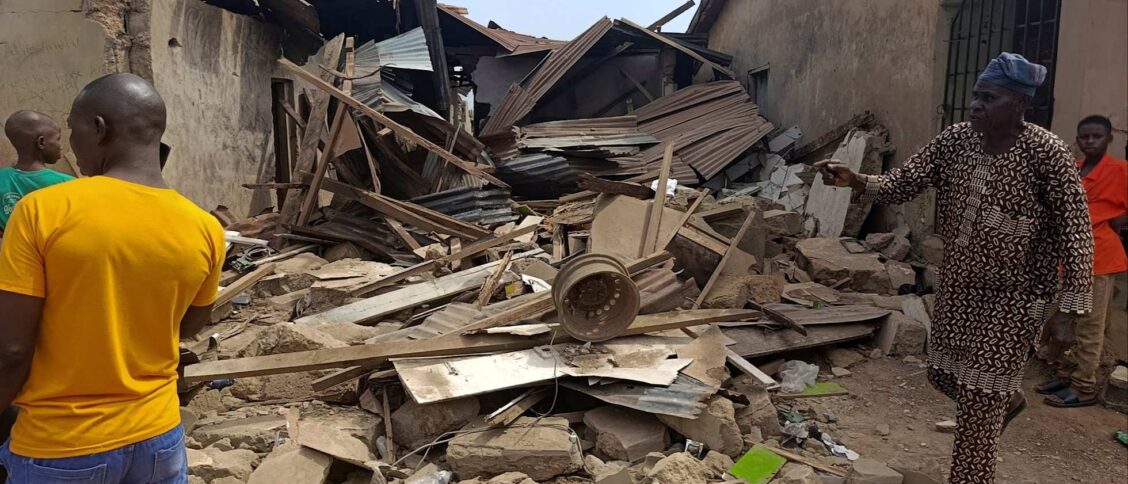

The images were dramatic: a fireball lighting up the night sky over a farm in Jabo, a town in Nigeria’s northwestern Sokoto State.
The U.S. military’s unprecedented Christmas Day airstrike on Nigerian soil was billed by some as a decisive “warning shot” against terrorism.
Yet, the conspicuous absence of confirmed casualties and the eerie silence on precise details have left a more chilling message hanging over the Sahel: something has begun, and its full consequences are terrifyingly unknown.
The Trump administration’s narrative, framed in the weeks leading up to the strike, was one of moral urgency. Top officials issued stark warnings about an alleged “Christian genocide” they accused the Nigerian government of enabling. The strike, by this logic, was a righteous intervention. However, to accept this simplification is to dangerously misunderstand Nigeria and the complex wildfire of instability it is battling.
Nigeria is not a tableau of binary religious war. It is a nation of over 200 million people, comprising more than 250 ethnic groups, where violence wears many masks. Yes, ideological armed groups like Boko Haram and its Islamic State-affiliated offshoots operate in the northeast. But the country is also convulsed by decades-old tensions between predominantly Muslim herders and Christian farmers over land and resources, rampant banditry in the northwest, and separatist agitations in the southeast.
To conflate these multifaceted crises into a single story of religious persecution is not just inaccurate, it is a policy-making peril.
This is where the “placebo bomb” theory gains traction. The strike, reportedly targeting a new and poorly understood cell called “Lakurawa,” appears surgical, symbolic, and curiously bloodless. Was its primary target truly a terrorist camp, or was it the American domestic audience, a tangible demonstration of “action” in response to genocide allegations? The lack of transparent after-action reports from both Washington and Abuja fuels such skepticism.
Nigeria’s response, notably from Foreign Minister Yusuf Tuggar, has been a masterclass in diplomatic recalibration. While confirming cooperation and a pre-strike call from the U.S. Secretary of State, Tuggar has firmly steered the narrative away from religion. “It is a regional conflict, it is not a Nigeria Christian-Muslim conflict,” he stated. In a subsequent post on X, he emphasized “coordinated action with partners who respect sovereignty and regional stability.” This is Nigeria asserting agency, reminding the world that while it welcomes partnership, it will not be a pawn in a simplified geopolitical or domestic American drama.
The critical question now is: What hand will dabble in this? The U.S. has now crossed a Rubicon, establishing a precedent for direct military intervention in Africa’s most populous nation. This single strike may be a contained flare, or it could be the first ember of a wider, uncontrolled blaze.
The risks are profound. A perceived U.S. alignment with one side of Nigeria’s intricate conflict mosaic could inflame the very sectarian divisions Washington claims to abate.
It could embolden a repressive Nigerian security apparatus, undermine delicate local peace efforts, and provide propaganda fuel for jihadist groups who long have claimed to be fighting Western imperialism. Furthermore, it risks triggering a scramble for influence in the region, with other global powers feeling compelled to protect their own interests, turning the Sahel into a proxy battleground.
The path forward requires not symbolic strikes but sustained, intelligent partnership. As security analyst James Matu notes, groups like “Lakurawa” are still being studied. The solution lies in addressing the root causes, governance failures, economic desperation, climate-induced scarcity, that fuel all forms of violence. It requires supporting regional cooperation through bodies like the ECOWAS and the African Union, not circumventing them.
The Christmas Day fireball in Sokoto has faded. What remains is the heat of a fraught new chapter. The United States has placed a bet with its first direct military action in Nigeria. The stakes are nothing less than the stability of a continent. The hope must be that this was a meticulously calibrated step based on deep regional understanding, and not a perilous plunge into a conflict few outside the region truly comprehend. The warning shot has been fired. The world must pray it does not become the opening volley of a much larger, and more devastating, war.
– F.Omosola