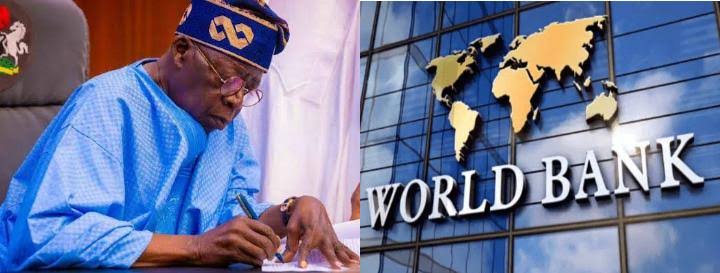

It’s extraneous. The Nigerian government has branded the World Bank recent figures a ‘lie’
Nigeria’s presidency has rejected the World Bank’s recent claim that 139 million Nigerians are living in poverty, describing the figure as “unrealistic” and detached from the nation’s current economic realities.
President Bola Tinubu’s Special Adviser on Media and Public Communication, Sunday Dare, made the government’s position clear in a post on his official X handle on Wednesday. He noted that while Nigeria values its partnership with the World Bank, the poverty estimate must be “properly contextualised” within the framework of global measurement models.
“While Nigeria values its partnership with the World Bank and appreciates its contributions to policy analysis, the figure quoted must be properly contextualised. It is unrealistic,” Dare stated.
According to the Presidency, the figure was based on the World Bank’s global poverty line of $2.15 per person per day, a benchmark set in 2017 using Purchasing Power Parity (PPP). It stressed that the number does not represent an actual headcount of poor Nigerians but an analytical model used for international comparison.
The statement further explained that, at current exchange rates, the $2.15 daily threshold translates to roughly N100,000 per month, well above Nigeria’s newly approved minimum wage of N70,000. This, it argued, shows that the benchmark is “not a direct reflection of local income realities.”
The Presidency added that PPP-based poverty assessments rely on outdated consumption data, Nigeria’s last major survey was conducted in 2018/19 and often fail to capture the informal and subsistence economic activities that support millions of Nigerian households.
“The government, therefore, regards the figure as a modelled global estimate, not an empirical representation of conditions in 2025,” the statement said. “What truly matters is the trajectory, and Nigeria’s is now one of recovery and inclusive reform.”