From Skibidi to Tradwife: How Social Media Slang is Reshaping the Cambridge Dictionary

The English language has always been a living organism, evolving with time, culture, and technology. But in recent years, the internet, particularly social media, has taken the driver’s seat in accelerating that transformation. Now, words born in viral videos, TikTok trends, and online subcultures are finding their way into the pages of the Cambridge Dictionary.
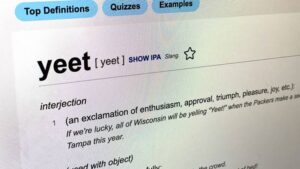
Among this year’s additions are terms that would have sounded alien just a few years ago: “skibidi”, a gibberish word popularized by a bizarre YouTube animated series, and “tradwife”, shorthand for “traditional wife”, a lifestyle trend centered on homemaking, marriage, and social media performance. Both are part of more than 6,000 new entries that Cambridge has confirmed will be added in 2024.
“Internet culture is changing the English language, and the effect is fascinating to observe and capture in the dictionary,” says Colin McIntosh, Cambridge’s lexical programme manager.
For instance, skibidi has already taken on a wide range of meanings, from expressing approval (“cool”) to disapproval (“bad”), or simply functioning as playful nonsense in conversations. Its popularity surged so much that reality TV star Kim Kardashian even flaunted a necklace engraved with “Skibidi Toilet,” referencing the viral YouTube series that spawned the term.
Meanwhile, tradwife reflects a cultural shift, capturing how communities online are reinventing (and debating) gender roles. It describes a married woman who proudly embraces traditional domestic duties, cooking, cleaning, and child-rearing, often while sharing curated glimpses of her life online.
But these two examples are only the tip of the iceberg. The dictionary’s updates span internet humor, workplace slang, and cultural commentary. “Delulu”, a shortened form of “delusional,” is now officially recognized as a playful way of describing people who choose to believe fantasies rather than reality.
The pandemic-era boom in remote work also left its linguistic mark. “Mouse jiggler”, the term for a device or software that simulates mouse movement to make an idle computer appear active, now has a formal dictionary entry.
There are also hybrid coinages that reflect growing social critiques. “Broligarchy”, for example, blends “bro” with “oligarchy” to describe a small group of wealthy, powerful men, often in tech, who wield outsized influence in business and politics.
Taken together, these new entries highlight how online culture, once dismissed as trivial, is now shaping the way English is spoken, written, and even codified in academia. From memes to hashtags, the lexicon of the internet is no longer fringe, it’s mainstream.
As McIntosh and his team note, every year the digital world leaves its fingerprints on the language. With each addition, dictionaries are becoming not just repositories of meaning, but archives of cultural change.
So the next time you hear someone drop a “delulu” or “skibidi” into casual conversation, don’t be surprised. Chances are, the dictionary is already catching up.


I loved as much as you will receive carried out right here The sketch is tasteful your authored subject matter stylish nonetheless you command get got an edginess over that you wish be delivering the following unwell unquestionably come further formerly again as exactly the same nearly very often inside case you shield this hike