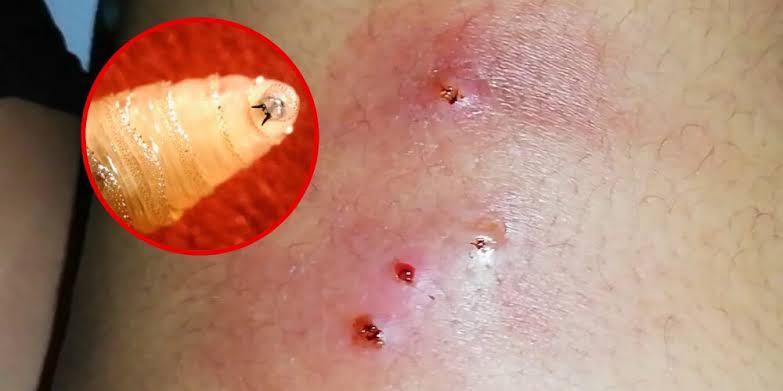

A recent case in Maryland has thrust the New World screwworm back into the spotlight, decades after the United States declared the deadly parasite eradicated. The infection was confirmed in a traveler who returned from El Salvador earlier this month, prompting urgent investigations by the Maryland Department of Health and the U.S. Centers for Disease Control and Prevention (CDC).
While the patient has recovered and health authorities insist the risk of wider spread is low, experts warn that the screwworm is not an insect to take lightly.
So, what exactly is the New World screwworm, and why is it considered so dangerous?
The screwworm, Cochliomyia hominivorax, is a species of blowfly unlike most others. Its larvae do not feed on dead tissue but instead burrow into the living flesh of warm-blooded animals, including humans. The female fly typically lays hundreds of eggs in an open wound, cut, or natural body opening. Once hatched, the maggots invade healthy tissue, consuming it from within and creating painful, festering wounds. The condition, known as myiasis, can be life-threatening if untreated.
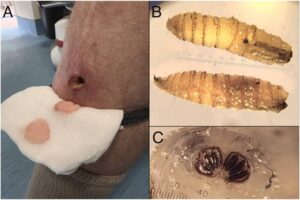
Symptoms are unmistakable and alarming: wounds that refuse to heal, foul-smelling discharge, bleeding, fever from secondary infections, and in severe cases, visible maggots crawling within sores or body cavities. Victims often describe the horror of feeling larvae moving beneath their skin.
The parasite poses a double threat. Medically, it endangers human and animal health with its capacity to cause rapid, destructive infestations. Economically, it has long been feared by farmers, as outbreaks among livestock can cripple herds and devastate rural livelihoods. This is why the U.S. invested heavily in eradication programs in the mid-20th century, successfully stamping it out through the sterile insect technique—flooding the environment with sterilized male flies to collapse the population.
But the screwworm is staging a comeback in parts of Latin America. Mexico, for instance, has reported a surge of cases in recent months, fueling fears of reinvasion northward. To stay ahead, U.S. authorities are strengthening surveillance, building a $750 million sterile fly facility in Texas, and authorizing emergency treatments for livestock.
For travelers, prevention is key. Protecting open wounds, using insect repellent, and wearing protective clothing in endemic regions reduce the risk of infestation. Sleeping indoors or in screened rooms is also strongly advised.
Treatment, when needed, is surgical: larvae must be removed from the body, followed by careful wound management and antibiotics.
While the Maryland case is isolated and under control, the lesson is clear: the New World screwworm is more than just an unpleasant bug. It is a flesh-eating parasite with the potential to wreak havoc on both health and economies if left unchecked.