Tensions Rise as ‘Nigerians Must Go’ Protest Exposes Growing Resentment in Ghana

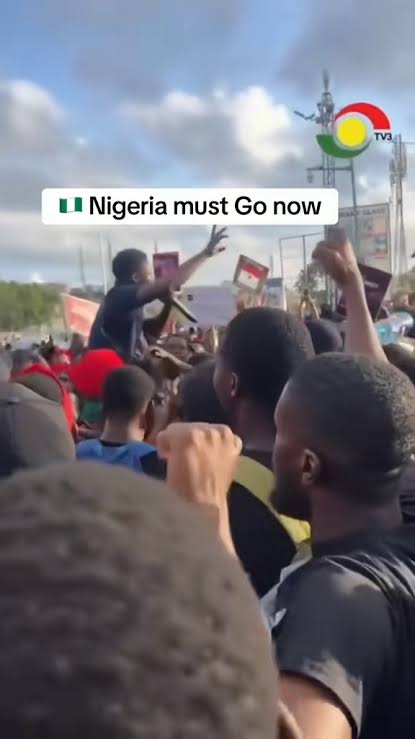
The entire plot has been an uncomfortable reminiscent of historical hostilities in West Africa. The recent protest in Ghana has reignited a long-simmering tension between locals and Nigerians living in the country. Chants of “Nigerians must go” reverberated through the streets of Accra as a group of demonstrators gathered outside the Nigerian High Commission. But this wasn’t just a spontaneous outburst, it was a symptom of deeper, unresolved issues festering below the surface.
The protest, reportedly sparked by a job vacancy posted by a Nigerian business operating in Ghana that explicitly excluded Ghanaian citizens, quickly morphed into a broader indictment of perceived economic dominance, cultural tension, and political unease associated with Nigerians in the country.
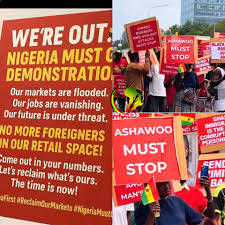
Videos of the protest circulated widely on social media, showing placards denouncing Nigerian businesses and urging them to leave Ghana altogether.
A Complicated Relationship
Nigeria and Ghana, two of West Africa’s most prominent nations, share a long and checkered history. Despite strong diplomatic ties and cultural exchanges, moments of mistrust and rivalry have occasionally overshadowed their relationship.
Many in Ghana view the growing number of Nigerian-owned businesses, particularly in sectors like fintech, real estate, and retail, as an encroachment. Nigerian entrepreneurs have earned a reputation for being bold, fast-moving, and willing to take risks, qualities that have brought both admiration and animosity.
But some locals argue that these qualities come at a cost. “They don’t integrate, they dominate,” one protester claimed. “They take over markets, hire their own, and leave nothing for Ghanaians.”
This sentiment, though not universally shared, has become more vocal in recent years, especially amid economic downturns and youth unemployment. As hardship bites, scapegoating becomes an easy outlet.
When History Echoes
The phrase “Nigerians must go” harks back to the 1983 expulsion of over two million undocumented West African immigrants, most of whom were Ghanaians, from Nigeria during an economic downturn. The bitter experience, remembered by many Ghanaians, is now being turned around in an unsettling echo of history.
“This is not the first time we’ve heard sentiments like this,” says political analyst Kojo Dansu. “But this time, it’s being fueled by misinformation, economic frustration, and a sense of lost identity in urban areas where Nigerian culture feels overpowering.”
Ghanaian authorities have called for calm, but civil society groups are calling for introspection. The Ghanaian economy, like others in the region, is heavily interlinked with cross-border trade, movement, and migration.
“There are Nigerians who’ve lived in Ghana for decades, raised families here, paid taxes, and contributed to the economy,” said Emmanuel Boateng, a human rights advocate. “Targeting an entire nationality over the actions of a few is dangerous and unproductive.”
While the protest was reportedly small, it has struck a nerve, sparking fears among Nigerian nationals living in Ghana. Many have called for increased diplomatic engagement and public education to avoid the escalation of xenophobic attitudes.
Business and Belonging
The job listing at the center of the controversy, allegedly excluding Ghanaians—was swiftly disowned by the company, which claimed the wording was a miscommunication. Nonetheless, the damage had already been done. Social media amplified outrage, with hashtags like #NigeriansMustGo and #GhanaFirst gaining traction.
Entrepreneurs on both sides have called for calm and clarity. “It’s not about nationality; it’s about merit and innovation,” said Chinedu Okoye, a Nigerian fintech founder in Accra. “We employ Ghanaians and contribute to the economy. We want to coexist and grow together.”
Yet beneath these calls for unity lies a challenge: how do both countries balance national identity and pride with regional integration and openness?
Whats Next?
The Ghana-Nigeria relationship is too deep to be undone by a single protest, but these flare-ups serve as warnings.
They reflect wider anxieties: the pressure on African governments to deliver economic security, the fear of cultural erasure, and the frustrations of young people left out of opportunity.
As the dust settles, leaders on both sides will need to address the root causes—not just the symptoms—of these tensions. Peace and unity in West Africa must be nurtured constantly, or risk unraveling with every new grievance.