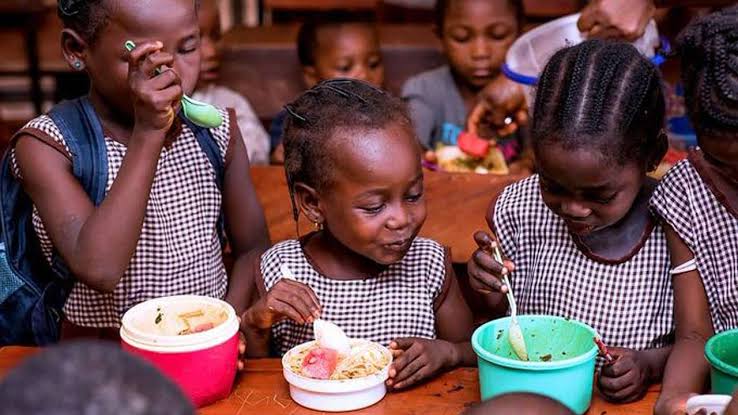

Nigeria’s National Home-Grown School Feeding Programme (NHGSFP), once hailed as a lifeline for millions of schoolchildren and rural households, is now in limbo.
Since its suspension in January 2024, the ripple effects have been deeply felt from empty stomachs in classrooms to dwindling incomes among farmers, cooks, and vendors.
Launched with the goal of enhancing school enrolment, improving child nutrition, and stimulating local agriculture, the programme was one of the core pillars of the National Social Investment Programme Agency (NSIPA). At its peak, it provided meals to over 9 million pupils and offered direct employment to more than 34,000 cooks, with an indirect value chain reaching at least 250,000 Nigerians.
But cracks had begun to show well before the plug was pulled. Under the previous administration of President Muhammadu Buhari, the NHGSFP grappled with operational flaws ranging from poor-quality meals and irregular payments to vendors, to allegations of widespread corruption. Despite these issues, the programme remained a crucial incentive for school attendance, particularly in underserved areas.
The tipping point came in January 2024, when President Bola Tinubu’s government suspended all NSIPA-run initiatives. The move followed the suspension of NSIPA CEO Halima Shehu over alleged financial improprieties, and later, the removal of the Minister of Humanitarian Affairs, Betta Edu. The fallout exposed deep-rooted problems within the agency including mismanagement, opaque disbursements, and the inability to account for billions in public funds.
A particularly damning revelation emerged during the COVID-19 era, when about N2.67 billion allocated for school feeding in Unity Colleges was traced to private bank accounts. The scandal shored up a culture of impunity, lack of transparency, and structural rot that had haunted the programme for years.
Now, more than a year after the programme was halted, the consequences are becoming harder to ignore. Thousands of cooks and small-scale farmers who once relied on the scheme for steady income have been left in the lurch. In classrooms, teachers report declining student attendance — a grim reversal of one of the programme’s core achievements.
The government has since made gestures toward a revival. In August 2024, the Minister of Finance and Coordinating Minister of the Economy, Wale Edun, announced plans to relaunch the NHGSFP. He affirmed that feeding schoolchildren would not only improve health outcomes but also tackle the rising number of out-of-school children — a pressing crisis in Nigeria’s educational landscape.
But for many stakeholders, these promises ring hollow without action. Some say that delays in restarting the programme could erode whatever gains had been made in past years. “If we fail to act quickly, we risk worsening hunger, malnutrition, and dropout rates — especially in vulnerable communities,” he warned.
The challenges ahead are daunting. Restoring trust in the system will require more than press briefings and political will. It demands structural reform, transparency, and a credible accountability mechanism to ensure that funds meant for the nation’s children do not end up lining the pockets of a few.
For now, pupils across Nigeria wait their plates empty, their futures uncertain.
Will the school feeding programme return better and stronger? Or will it become another lost opportunity in Nigeria’s long struggle to deliver basic social services with integrity?
Only time and decisive action will tell.