Screen Time and the Developing Brain: Are Parents Right to Be Worried?

Tablets, smartphones, digital devices and smart TVs have become a part of the everyday life in today’s evolving world. But there is a throbbing question: how much screen time can hurt a child?

While parents scramble to enforce screen limits, science continues to wrestle with the facts: is screen exposure genuinely damaging to a child’s brain, or are we overreacting to a modern lifestyle shift?
Does it Hurt?
Screen time is often blamed for a host of issues, from rising depression in teenagers to behavioural changes and sleep disruption. One of the loudest voices warning of screen-related harm has been that of Baroness Susan Greenfield, a renowned neuroscientist. As far back as 2013, she warned that excessive internet use and gaming could negatively alter the adolescent brain, likening the effects to the early, under-recognised impacts of climate change.
Her warning resonated, prompting many to re-evaluate how much time children should spend online. But not everyone in the scientific community agrees with her conclusions.
Also, an editorial published in the British Medical Journal took aim at Greenfield’s claims, stating that they were “not based on a fair scientific appraisal of the evidence” and could mislead both parents and the wider public.
Psychologist Pete Etchells, a professor at Bath Spa University, is one of a growing number of researchers calling for more nuance in the screen time debate. In his book Unlocked: The Real Science of Screen Time, Etchells analyses hundreds of studies and argues that the panic surrounding digital devices is often driven more by media headlines than by solid science.
“Concrete scientific evidence to back up stories about the terrible outcomes of screen time simply isn’t there,” he writes. His findings align with a 2021 review published by the American Psychology Association, which examined 33 studies from 2015 to 2019 and concluded that screen use, including smartphones, social media, and video games, played “little role in mental health concerns.”
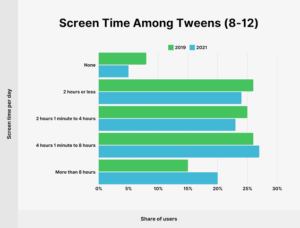
Even the issue of screens affecting sleep has come under scrutiny. While some studies have suggested that blue light emitted by screens can disrupt melatonin production, a 2024 review of 11 international studies found no consistent evidence that screen exposure before bed significantly disrupts sleep patterns.
Yet, despite this evolving science, high-profile tech leaders seem to err on the side of caution. Steve Jobs, the former CEO of Apple, reportedly limited his children’s use of the iPad, the very device his company introduced. Microsoft co-founder Bill Gates has said he restricted his children’s access to screens as well.
WHO’S Warning
The World Health Organization (WHO) currently recommends zero screen time for children under the age of one, and no more than one hour per day for those under four. But even these guidelines are aimed more at encouraging physical activity and reducing sedentary behaviour than targeting screen use itself as inherently harmful.
Still, the confusion lingers: Are we harming our children by giving them screens — or by taking them away?
The lack of conclusive evidence has left the scientific community divided. Some researchers argue that without definitive data, it’s safer to limit exposure. Others believe that in trying to shield kids from screens, we may be denying them valuable digital literacy and social skills crucial for modern life.
Coping Options?
It’s a dilemma many parents face daily. Limit screen time, and you might protect your child’s attention span and sleep. But go too far, and they could fall behind in a digitally driven world lacking the adaptability and confidence their peers are gaining.
The stakes are high. If it turns out that screens are significantly damaging to cognitive or emotional development, the effects may not fully reveal themselves for years. But if the concerns prove unfounded, we may have spent years policing children away from a technology that could have enriched their lives.
For now, the key might lie in balance, context, and content. What children are watching and with whom may be just as important as how long they’re watching.
Parents don’t necessarily need to ban screens, but they must remain engaged, discerning, and aware, pruning back when necessary, and planting healthier digital habits for the future.