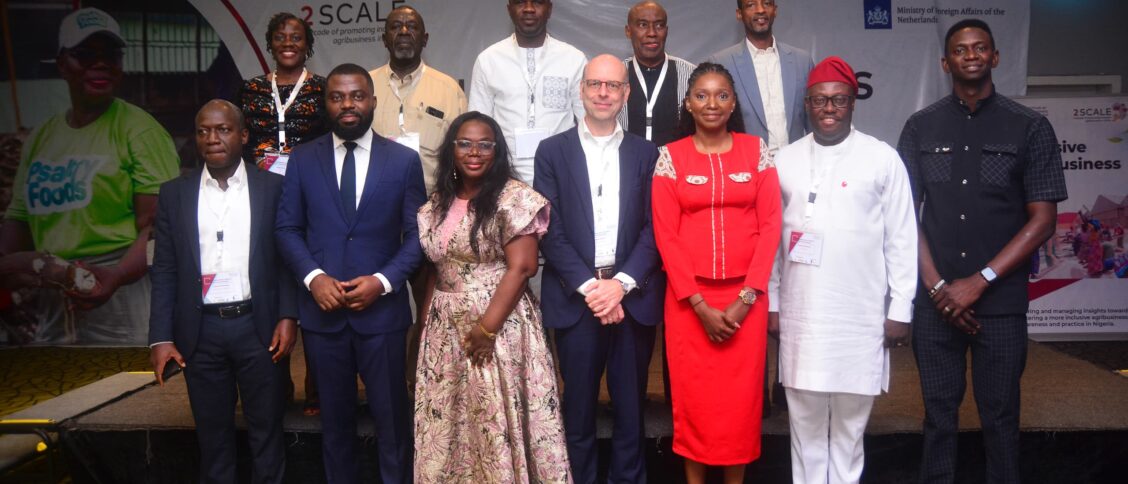

On July 22, stakeholders in Nigeria’s agribusiness sector gathered at the Radisson Blu Hotel, Ikeja, Lagos, to celebrate and reflect on over a decade of impact by 2SCALE, a Dutch-supported initiative aimed at incubating and accelerating inclusive agribusiness across Africa.
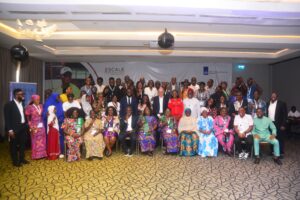
The Public-Private Dialogue, hosted by 2SCALE, brought together key players in agriculture, finance, and development to discuss pathways to sustainable food systems and the future of inclusive farming in Nigeria.
The conversations scooped up the concept of inclusive agribusiness, an idea that explains why actors within agricultural value chains, especially smallholder farmers, women, and youth, should be equitably integrated into commercial systems for mutual benefit.
Challenges and Resilience
Marina Diboma, Programme Director for 2SCALE, highlighted how resilience defined their success story. “We’re winding down with pride. Despite security issues, COVID-19, and input price hikes from the Russia-Ukraine war, our public-private partnerships stayed strong,” she said.
“We’ve empowered vulnerable communities and helped ensure that nutritious food remains accessible and affordable.”

Meanwhile, Country Team Leader of the 2SCALE programme, Maxwell Olitsa set the tone with a reflective presentation on the initiative’s 12-year journey. “Our focus has been to incubate and accelerate inclusive agribusiness by co-creating programs with lead firms, SMEs, and farmer cooperatives,” he explained.
“We’ve built agribusiness clusters in several states and worked with 19 companies, ranging from large firms to micro-enterprises.”
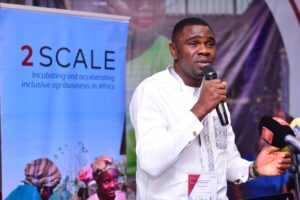
The goal now, Olitsa said, is sustainability. “The way forward is to transfer all our knowledge and achievements to stakeholders within the Nigerian agribusiness ecosystem, particularly through collaboration with the Institute of Agribusiness Management,” he stated.
This legacy approach will help institutionalize inclusion by ensuring that women, youth, and smallholder farmers continue to benefit even after 2SCALE’s exit.
Dutch Support and the Need for Agricultural Professionalisation
Earlier, The Consul General of the Kingdom of the Netherlands in Lagos, Michel Deelen, emphasized the critical role of professionalising Nigeria’s agriculture sector.
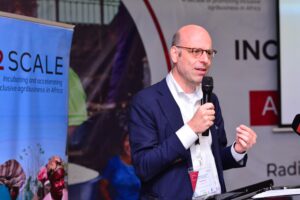
“To meet the standards Nigeria needs, mechanisation, agro-processing, better inputs, we need to shift from small, subsistence farms to a more industrialised model,” Deelen said. “This will bring down food prices and increase availability.”
He also acknowledged the strategic role women play. “In projects we support, women-led initiatives have often proven more successful. We always prioritise women farmers and entrepreneurs to ensure project success,” he added.
Psaltry’s International Growth Story: From 150 to 3,500 Farmers
One of the clearest indicators of 2SCALE’s impact was delivered by Yemisi Iranloye, CEO of Psaltry International. Her company, known for using cassava to produce sorbitol, the first in Africa, benefited from a 2SCALE grant that helped them scale operations dramatically.
“Through 2SCALE, we built our agri-staff capacity, expanded transport systems, and grew from 150 to 3,500 farmers,” Iranloye said. “The grant wasn’t in cash, but it was in kind—and it laid the foundation for our raw material strategy.”
Iranloye believes support should go through operational companies. “These companies ensure that the farmers benefit directly, improving their economic status, strengthening the ecosystem, and providing a stable supply chain.”
Meanwhile, the managing Director of the Bank of Agriculture, Ayo Sotirin, pledged support for scaling proven agribusiness models. “From what we’ve seen, such as Psaltry Farms, models that have succeeded should be multiplied to combat food insecurity,” he said. “We’re digitising our services to ensure farmers have unique IDs, credit profiles, and digital access to loans.”
Sotirin revealed that the bank is creating a credit scoring system based on farmers’ performance and digital land assets. “This will make financing more efficient and targeted,” he noted.
The Case for Agribusiness Clusters
Taking a view on how to build resilient Agribusiness Models, one of the panelists at the event, Mayowa Ekundayo lauded the sustainability built into the project.

According to the COO ” PostAgVest Solutions Limited: “The agribusiness clusters formed are ecosystems where individual players thrive. If we replicate these across Nigeria, we can effectively eliminate food insecurity,”.
The agribusiness event later featured a screening of “Food Soldiers”, a documentary highlighting 2SCALE’s footprint in Africa.
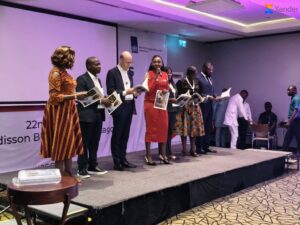
It ended with the unveiling of the 2SCALE Interactive Magazine, presented by Marina Diboma, showcasing years of partnership, growth, and success stories.
Watch the full documentary FOOD SOLDIERS here