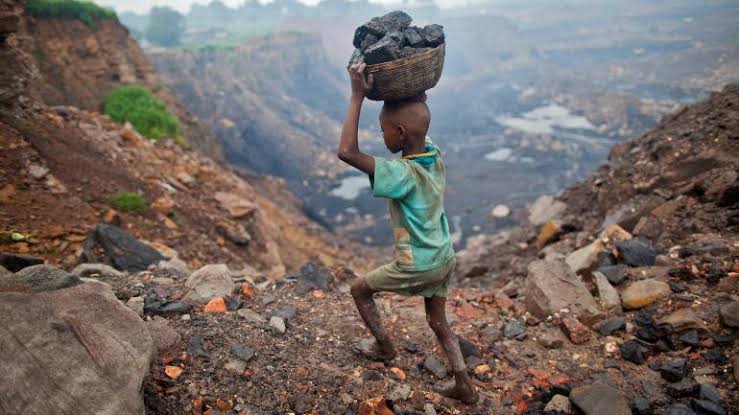
Global Child Labour Drops to 138 Million, but Pace Too Slow to Meet 2025 Target — UN, ILO Warn

A new joint report by the International Labour Organisation (ILO) and the United Nations Children’s Fund (UNICEF) has revealed that nearly 138 million children worldwide were still engaged in child labour in 2024 — including 54 million involved in hazardous work that threatens their health, safety, and development.

Although the figures mark a decline from 160 million in 2020, the agencies warn that progress is too slow to meet the global target of ending child labour by 2025. At the current pace, they estimate that the world would need to accelerate efforts elevenfold to achieve the goal.
“There are over 100 million fewer children in child labour today than in 2000, even as the child population increased by 230 million,” the report noted.
The findings come ahead of World Day Against Child Labour (June 12) and the International Day of Play (June 11) — both of which spotlight the rights of children to safety, development, and play.
A Mixed Picture: Progress, but Still Too Slow
The decline in global child labour is welcome, particularly following fears that the COVID-19 pandemic would exacerbate the problem. According to the report, those fears have not materialized, and the world is “back on a path of progress.”
But the overall numbers remain worrying, especially with millions of children still deprived of basic education and forced into dangerous work.
The report attributed the recent improvements to several key policy imperatives, urging governments to scale up these strategies to protect children more effectively.
What’s The Blueprint for Ending Child Labour?
Some of the most impactful strategies include:
Free and quality schooling to offer children a meaningful alternative to labour.
Education systems tailored to support transitions from school to decent work, especially for older adolescents vulnerable to unsafe jobs.
Stronger legal protections aligned with international labour standards to prevent exploitation and support enforcement.
The report also stressed that ending child labour requires integrated development strategies, linking social protection, macroeconomic frameworks, labour market reforms, and sectoral policies.
“Targeted policies must go hand in hand with broader development strategies… child labour concerns must be systematically mainstreamed into economic and social planning,” the report stated.
While the decline from 160 million to 138 million is a step in the right direction, ILO and UNICEF caution against complacency. They stress that millions of children still remain trapped in cycles of poverty and exploitation.