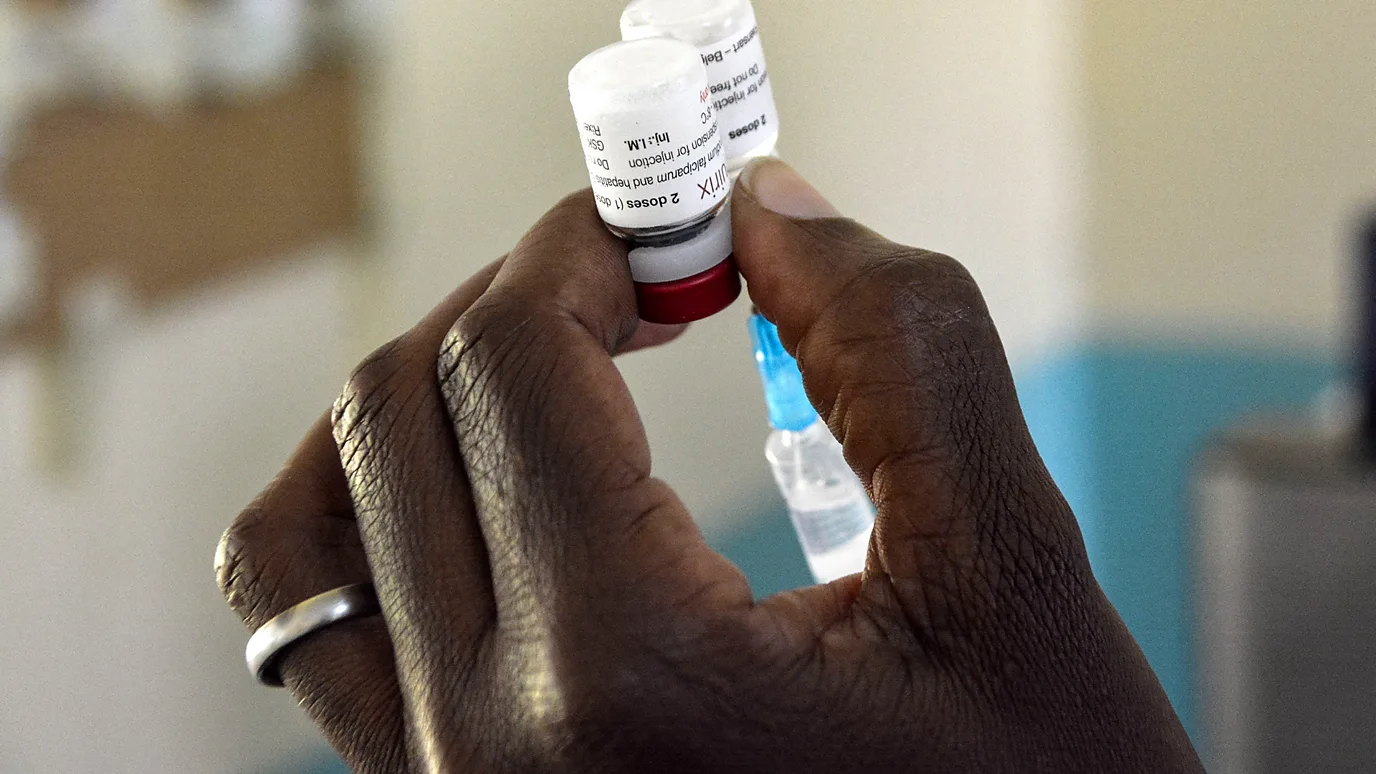

Despite decades of efforts and billions spent on prevention, malaria remains one of the deadliest diseases in Africa silently claiming over half a million young lives each year. In 2021 alone, an estimated 247 million cases and 619,000 deaths were recorded globally, with Africa bearing nearly the entire burden. The urgency for a game-changing vaccine has never been greater.
Indeed, malaria is feeding fat on vulnerable flesh at the cost of human immunity.
For children under five, the disease is especially unforgiving. Many die before they are even properly diagnosed. Its symptoms: fever, chills, headache, often mirror other common illnesses, delaying treatment. When untreated, malaria can cause severe illness or death in as little as 24 hours.
But after decades of slow progress, two World Health Organization (WHO)-approved vaccines, RTS,S and R21 have sparked new hope for a turning point. And in 2024, that hope started to materialize when Cameroon became the first country to launch routine malaria vaccination, quickly followed by Burkina Faso.
“Control of malaria has not been going in a good direction,” says Dr. Kate O’Brien, Director of Immunisation, Vaccines and Biologicals at the WHO. “We’re now seeing an increase in cases, fueled by climate change, conflict, weakened health systems post-COVID, and mosquito resistance to insecticides.”
A Vaccine Three Decades in the Making
Developing a vaccine for malaria is no small feat. Unlike bacteria or viruses, the malaria parasite, Plasmodium*, is a highly evolved organism with a complex, multistage life cycle that makes it a difficult target for the immune system. It reproduces in both humans and mosquitoes, changes shape frequently, and possesses a genetic diversity that allows it to escape immune detection.
The journey to an effective vaccine has taken over 30 years, marked by setbacks and scientific breakthroughs. RTS,S, the world’s first malaria vaccine, was first recommended by WHO in 2021 after successful pilot programmes in Ghana, Kenya, and Malawi. It was soon joined by R21, a next-generation vaccine developed by the University of Oxford and prequalified by WHO in December 2023.
In areas with highly seasonal malaria transmission, the R21 vaccine reduced malaria cases by 75%, a rate comparable to RTS,S when administered under similar conditions.
The Power of Two: A Turning Point for Africa
The availability of two WHO-approved malaria vaccines is a major leap forward in the battle against malaria. While there is no clear evidence showing that one vaccine is superior to the other, WHO emphasizes that the choice between them should depend on factors such as availability, cost, and national programme needs.
More importantly, these vaccines add a new weapon to the malaria control toolkit, one that works through the immune system, rather than relying solely on external interventions like bed nets or insecticide spraying, both of which are losing effectiveness due to resistant mosquito strains.
“Mass malaria vaccination offers a completely different, immune-based approach,” says Dr. O’Brien. “It’s historic and critically needed.”
Why It Took So Long
Parasitic diseases like malaria have long struggled to attract attention from conventional vaccine developers. The reasons are complex: from limited commercial incentives and scientific difficulty, to the fact that malaria is mostly confined to low- and middle-income countries, which often lack the resources to drive vaccine research and production.
Even repeated exposure to malaria doesn’t confer lifelong immunity. People can continue to get infected, often without symptoms and unknowingly transmit the disease to others.
To address these challenges, global health institutions have created the Malaria Vaccine Technology Roadmap, a strategy to fast-track vaccine development. Among its goals: developing a vaccine with at least 75% protective efficacy by 2030 and creating vaccines that can help eliminate malaria through mass campaigns.
A Future Within Reach
Innovations are already underway. Transmission-blocking vaccines, which aim to interrupt the parasite’s life cycle in mosquitoes and mRNA-based malaria vaccines, modeled on COVID-19 vaccine platforms, are currently in development.
Meanwhile, the success of RTS,S and R21 offers hope that malaria deaths could dramatically decline if these vaccines are widely deployed and if the funding, logistics, and political will are sustained.
With climate change and population displacement threatening to worsen malaria transmission, Africa must act fast. The continent can no longer afford to treat malaria as a perennial burden. It must confront it as a solvable health crisis, one jab at a time.
Can we still salvage this situation?