

In the quiet hills of Serrinha dos Pintos, a small town in northeastern Brazil with fewer than 5,000 residents, an enigma had plagued the community for decades.
For years, local families watched helplessly as their children lost the ability to walk, their bodies gradually weakened by an unknown affliction. With no answers and no one to turn to, the town seemed to be trapped in its own biological mystery. That is, until one woman’s research would illuminate the dark corner of genetics where answers had long been obscured.
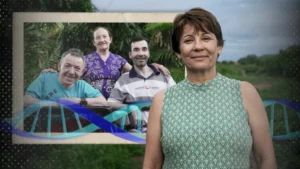
Biologist and geneticist Silvana Santos, who would eventually be named one of BBC’s 100 Most Influential Women in 2024, embarked on a journey that would change the course of history for this rural town. She uncovered a previously unknown condition, now known as Spoan syndrome, a debilitating genetic disorder that affects the nervous system and has the power to gradually incapacitate the body. This discovery would forever alter the lives of those in Serrinha dos Pintos, giving them the diagnosis they had long sought, along with the resources to face the challenges ahead.
A Community Without Answers
More than two decades ago, when Santos first visited Serrinha, families had no idea why so many children had lost the ability to walk. Local residents, many of whom were related to Santos through extended family ties, shared stories of children like Zirlândia. She had been a bright young girl, but as time passed, she lost her ability to control her eyes and limbs. Her condition worsened, and soon, she was confined to a wheelchair. But no one could provide an explanation.
Santos was drawn to the town after hearing about the unusual and widespread condition from cousins living in São Paulo. She began her research, speaking with residents, collecting DNA samples, and listening to family histories that often traced multiple generations of illness. What started as a casual investigation quickly turned into a mission, and the results would astonish the world.
The Power of Genetic Research
Santos’s team eventually uncovered the genetic mutation behind Spoan syndrome. It occurs when a small fragment of a chromosome is lost, causing a gene to produce an excessive amount of a critical protein in brain cells. This mutation leads to the gradual weakening of the body, particularly the limbs. However, the syndrome only manifests when the mutated gene is inherited from both parents.
Santos’s 2005 study marked the first formal description of Spoan syndrome in the scientific community. It also revealed something striking: Spoan was not an isolated case in Brazil.
Through her work, Santos discovered 82 other cases worldwide, all connected by a common thread—a genetic mutation that had likely been passed down for generations.
Genetics and Family Ties
As Santos delved deeper into her research, one surprising discovery stood out: many of the families in Serrinha were related. Geographically isolated, with few families moving in or out of the region, marriage between cousins was common. The town’s tight-knit nature, combined with the prevalence of cousin marriages, raised the risk of inheriting genetic mutations like the one causing Spoan syndrome.
While cousin marriages are not uncommon in many parts of the world, the risks they pose to genetic health are often underestimated. Geneticists like Luzivan Costa Reis from Brazil’s Federal University of Rio Grande do Sul point out that the chance of a child inheriting a rare genetic disorder is higher in consanguineous marriages. In Serrinha, where over 30% of couples were found to be related, nearly a third of the children had some form of disability linked to genetic mutations.
The Road to Discovery
For Santos, the journey to uncover Spoan syndrome was long and filled with challenges. What was supposed to be a brief three-month field study stretched into years of dedicated work. Santos traveled back and forth from São Paulo to Serrinha, sometimes covering 2,000 kilometers in a single trip. She collected DNA samples, engaged in heartfelt conversations with families, and worked tirelessly to pinpoint the cause of the illness. Her persistence paid off in 2005 when the study was finally published, marking a breakthrough not only for the town but for the scientific world.
A Global Mystery with Deep Roots
The origins of Spoan syndrome are thought to be tied to early European settlers in Brazil, with strong evidence pointing to Sephardic Jewish or Moorish ancestry—groups who may have carried the mutation over 500 years ago. A discovery of similar cases in Egypt further supported this theory, suggesting that the genetic mutation likely traces back to Iberian Peninsula populations.
For the families of Serrinha, this new knowledge brought not only understanding but also hope. Though there is no known cure for Spoan, the awareness of the syndrome has spurred changes. Wheelchairs, which were once a rarity in the town, now allow patients to live more independently and reduce the risk of deformities that were once common among sufferers who had little mobility.
The lives of those affected by Spoan are still challenging. The physical limitations worsen over time, and by the age of 50, nearly all patients require full-time care. But there is a sense of progress. For Rejane, whose father Lolô recalls the local legend of “Maximiano,” a distant relative believed to have spread the genetic mutation, life has improved. Rejane, who once had to lie in bed due to lack of mobility, now has a wheelchair, offering her a degree of independence she never had before.
However, the emotional toll remains. Inés, whose two sons suffer from Spoan, describes the anguish of watching loved ones struggle with the condition. “We love them the same, but we suffer for them,” she says, her voice tinged with the pain of years spent caring for her children.
While Spoan syndrome remains a rare and little-understood condition, the work of Silvana Santos has sparked a conversation about the intersection of genetics, family, and health. The discovery of Spoan not only illuminated the genetic ties within Serrinha but also highlighted the broader implications of inherited diseases across the globe.
Santos’s work reminds us of the importance of scientific curiosity and dedication, especially in rural areas where resources and knowledge are often scarce.