

Every year, nearly some one billion tires reach the end of their life, with many piling up in landfills, posing environmental and health risks. But in Rwanda, one woman is proving that discarded rubber can be transformed into something both fashionable and sustainable.
Kevine Kagirimpundu, a creative designer turned entrepreneur, is tackling waste one shoe at a time. With a degree in creative design from the University of Rwanda, she initially considered a conventional career path but soon found herself drawn to a more hands-on solution—recycling old tires into durable shoe soles.
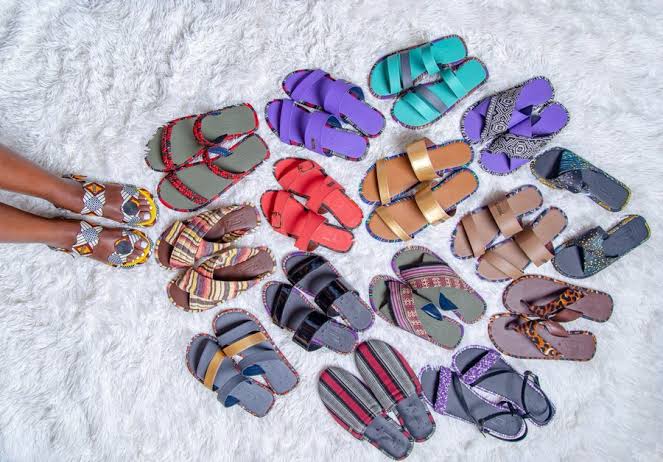
Guess what? In 2013, she teamed up with her friend Ysolde Shimwe to launch Uzuri K&Y, an eco-conscious footwear brand that blends style with sustainability. The name, incorporating the founders’ initials, also carries the Swahili meaning of beauty and goodness, a fitting reflection of their mission.
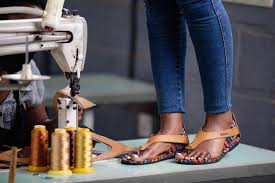
The company sources old tires from local landfills and upcycles them into handcrafted sandals for men, women, and children. Operating out of a production facility in Kigali, Uzuri K&Y has scaled up to manufacture more than 4,500 pairs of sandals each month, selling them both online and in physical stores across Rwanda and Kenya.
Beyond business, Kagirimpundu was driven by a desire to contribute to Rwanda’s environmental movemen.
“We wanted to be different but also part of the solution,” she said.
The country has been a pioneer in sustainability, banning plastic bags in 2008 and extending restrictions to single-use plastics in 2019. Uzuri K&Y aligns with this vision, turning waste into functional fashion.

According to a Rwanda Environment Management Authority report, the country discarded more than 5,000 tons of tires in 2022. Kagirimpundu’s initiative has already removed 10 metric tons of rubber from landfills, proving that upcycling can have a tangible impact.
But for the entrepreneur, the brand’s social mission is just as vital as its environmental one.
“We had to create a business that actually became a source of employment for women,” she said. With Rwanda’s unemployment rate at 13%—and even higher for women at 14.5%, Uzuri K&Y is providing an opportunity where few exist.
One of the biggest challenges in the early days, she recalls, was a lack of skilled labor. “Nobody knew how to make shoes,” Kagirimpundu admitted. Instead of giving up, she launched a training program to teach locals the craft of shoemaking.
So far, 1,500 young people; 70% of them women, have gone through the program, acquiring skills that allow them to become artisans and entrepreneurs in their own right. “It’s priceless to give a woman a steady income,” Kagirimpundu said.
For her, it’s about more than just footwear, it’s about women coming together to build something bigger than themselves. As her brand continues to grow, it stands as a model for how African innovation can tackle waste, create jobs, and redefine sustainability in fashion.