For many, cornrows are a stylish and cultural expression, but their history runs much deeper. In the brutal era of slavery, these intricate braids were not just a hairstyle, they were a secret survival tool carrying maps, messages, and even resources for those seeking freedom. Hmmmm.
Since enslaved people were often forbidden from reading or writing, they had to find creative ways to communicate and plan escapes. Hair became an unlikely but powerful medium. Cornrows were designed to hold information, guiding enslaved people toward safe routes leading to freedom in the North.
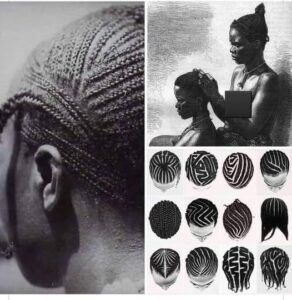
Historians trace this practice back to Colombia, South America, where a formerly enslaved African named Benkos Biohó used braiding patterns as a method of resistance. In the late 1500s, he encouraged women to create intricate maps in their hair, embedding escape routes into their designs.
These styles were sometimes called “canerows”, a reference to the sugarcane fields where many enslaved Africans worked.
One particularly significant style featured curved braids, tightly woven to mimic the winding roads and pathways that would lead to freedom. In some cases, the number of braids indicated how many roads needed to be crossed, while their shape signaled landmarks along the journey.
Cryptic Messages Passed
Cornrows also served a practical purpose, they became a way to hide valuables. Enslaved people would weave gold and seeds into their braids, ensuring they had both financial resources and the means to plant crops when they reached safety.
This small act of defiance gave them a chance to survive and rebuild their lives after escape.
Perhaps the most remarkable aspect of this strategy was its secrecy. Plantation owners and overseers never suspected that a simple hairstyle could hold the key to a covert escape plan.
The intricate braids, seen as nothing more than a grooming choice, concealed life-saving information right in plain sight.
Today, cornrows continue to be an emblem of African heritage and strength, carrying the stories of those who used them as a path to liberation.