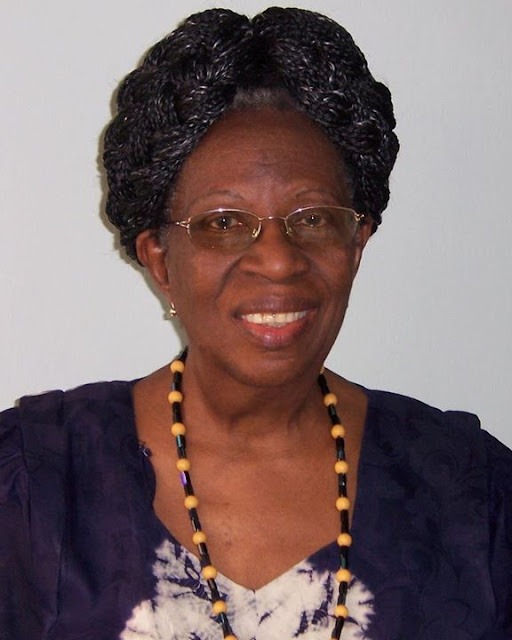

The passing of Mabel Segun at 95 is more than the loss of a literary icon, it is the closing of a chapter in Nigeria’s cultural and intellectual history.
A woman of many firsts, Segun was not just a novelist; she was a poet, a broadcaster, a diplomat, an educator, and a sportswoman who wielded her pen with as much precision as she did her tennis racket. Her life was a masterclass in versatility, purpose, and impact.
She lived beyond the pen. Born in 1930 in Ondo City to Reverend Isaiah and Eunice Aig-Imoukhuede, Segun’s life was steeped in discipline and ambition from the start. She was educated at the prestigious CMS Girls School, Lagos, and later at the University of Ibadan, where she studied English, Latin, and History. Even as a student, her talent was undeniable, she won the maiden Nigerian Festival of the Arts Literature Prize in 1954, the same year she graduated.
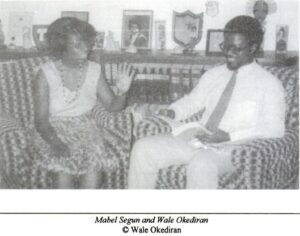
But Mabel Segun was never one to be confined by a single role. Her career spanned multiple fields, she was an editor, an education officer, a broadcaster, a book development secretary, and even Nigeria’s Deputy Permanent Delegate to UNESCO. Whether in literature, education, or public service, she left her mark in ways that continue to shape the nation today.
For many, Segun’s name is synonymous with children’s literature. She championed the genre at a time when it was largely overlooked in Nigeria, founding the Children’s Literature Association of Nigeria (CLAN) in 1978 and later establishing the Children’s Documentation and Research Centre (CLIDORC) in 1990. She believed that storytelling was not just an art but a responsibility—a means to shape young minds, preserve culture, and inspire future generations.
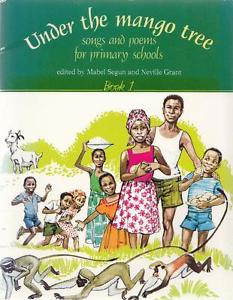
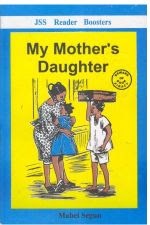
Her works, including the autobiographical -My Father’s Daughter- and -My Mother’s Daughter-, became literary classics. Her poetry collection -Conflict and Other Poems- and short story compilation -The Surrender and Other Stories- demonstrated her mastery across genres. Segun’s writings traveled beyond Nigeria, appearing in over 30 anthologies worldwide and translated into multiple languages, including German, Danish, Swahili, and Arabic.
Mabel Segun was not just a writer; she was a literary diplomat. She served on international book review panels, collaborated with the International Board on Books for Young People (IBBY), and played an instrumental role in assessing the prestigious Noma Award for Publishing in Africa. Her contributions were recognized globally. She was nominated for the Astrid Lindgren Memorial Award in 2007, and her innovative children’s book Readers’ Theatre: Twelve Plays for Young People won the LNG Nigeria Prize for Literature.
A Legacy That Lives On
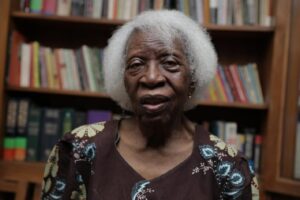
Segun’s passing is a loss, but her legacy is indelible. Her work as a writer, educator, and advocate has paved the way for future generations of Nigerian and African writers. She was a woman who refused to be placed in a box, proving that literature can coexist with sports, diplomacy, and education.
In a country still striving for literary excellence and global cultural influence, Mabel Segun remains a shining example. Her words, her passion, and her unwavering dedication to storytelling continue to inspire. Though she is gone, her voice lingers in the pages she wrote, the institutions she built, and the countless lives she touched.
Mabel Segun may have left us, but the stories she told—and the ones she made possible—will live on forever.