

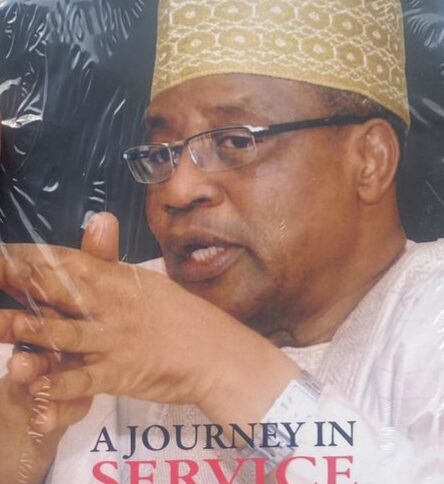

Public reactions to IBB’S Bombshell book has been mixed and unhinged. Wow!
Turaki Abdulhamid Yahya in his opinion piece here wrote “The disparity between the affluent and the impoverished becomes more pronounced in such contexts, leading to discussions about the priorities of the nation’s wealthy and their role in societal development.”
The release of General Ibrahim Badamasi Babangida’s autobiography, A Journey in Service, has sparked widespread debate across Nigeria. As one of the country’s most polarizing figures, Babangida’s attempt to present his perspective on key historical events has been met with both interest and skepticism. While the book provides an intimate look into his tenure, it also raises critical questions about historical narratives, leadership accountability, and the socio-economic implications of its lavish launch.

The Controversy Surrounding the Book
Since its release, the book has remained at the center of national discourse. Critics argue that the book serves as an attempt to whitewash Babangida’s controversial legacy, portraying events in a way that may downplay the consequences of his administration’s actions. His role in Nigeria’s political history, particularly concerning issues such as structural adjustment policies, the annulment of the 1993 presidential election, and military rule, remains contentious.
Conversely, supporters of the book assert that Babangida has the right to share his side of the story. They argue that Nigeria’s history cannot be told without hearing directly from those who shaped it. From their perspective, A Journey in Service provides valuable insights into the complexities of leadership during turbulent times, allowing for a more nuanced understanding of governance challenges.
The Grand Book Launch and the Ethics of Wealth Allocation
One of the most talked-about aspects of the Autobiography is not just its content but the extravagant book launch. The event saw Nigeria’s business elite pledge nearly N18 billion, with Aliko Dangote committing N8 billion over four years and Abdul Samad Rabiu contributing N5 billion. Such staggering figures have ignited intense debates about the ethical and economic implications of such donations in a country grappling with poverty, unemployment, and infrastructural decay.
Many citizens question whether these funds could have been better allocated to social development projects rather than an autobiography. The optics of billionaires contributing enormous sums to a book launch while millions struggle to afford basic necessities further highlight the widening gap between Nigeria’s elite and the common people. This raises fundamental questions about the priorities of Nigeria’s wealthy class and their role in national progress.
The Broader Implications of the Autobiography
Beyond the controversies surrounding Babangida himself, the book contributes to a larger discussion on how Nigerian history is documented and remembered. Nigeria lacks a strong culture of detailed autobiographical accounts from key political figures, leaving historical narratives largely shaped by external voices. In this context, A Journey in Service adds a primary source to the historical discourse, offering future researchers and political analysts material to dissect and critique.
However, the concern remains: to what extent does the book offer objective reflections? Given Babangida’s vested interest in shaping his legacy, readers must approach the autobiography with a critical eye, comparing it with other historical accounts and testimonies from those affected by his policies.
Despite the controversies, A Journey in Service presents several learning opportunities for Nigeria’s youth:
1. It provides a firsthand account of major events in Nigeria’s history, offering insights that may not be available in standard history books.
2. Babangida’s reflections on leadership challenges, governance dilemmas, and decision-making processes can serve as a case study for students of political science and history.
3. The divided opinions on the book encourage critical thinking, prompting young readers to question narratives, analyze policies, and engage in informed discourse.
Why Nigerians Should Engage with the Book
Regardless of one’s opinion on Babangida, engaging with A Journey in Service is crucial for those interested in Nigeria’s political evolution. Here’s why:
1. It allows Nigerians to evaluate Babangida’s perspective against other historical records, fostering a balanced view of the country’s past.
2. Understanding past leadership decisions, both successes and failures, enables informed discussions on current governance challenges.
3. By studying how history is written and who controls the narratives, citizens can become more discerning about political discourse and media framing.
This is the first time IBB is asking for a favour. If you know what I mean.











Hello there! This is my first visit to your blog!
We are a collection of volunteers and starting a new project in a community in the same niche.
Your blog provided us beneficial information to work
on. You have done a marvellous job!