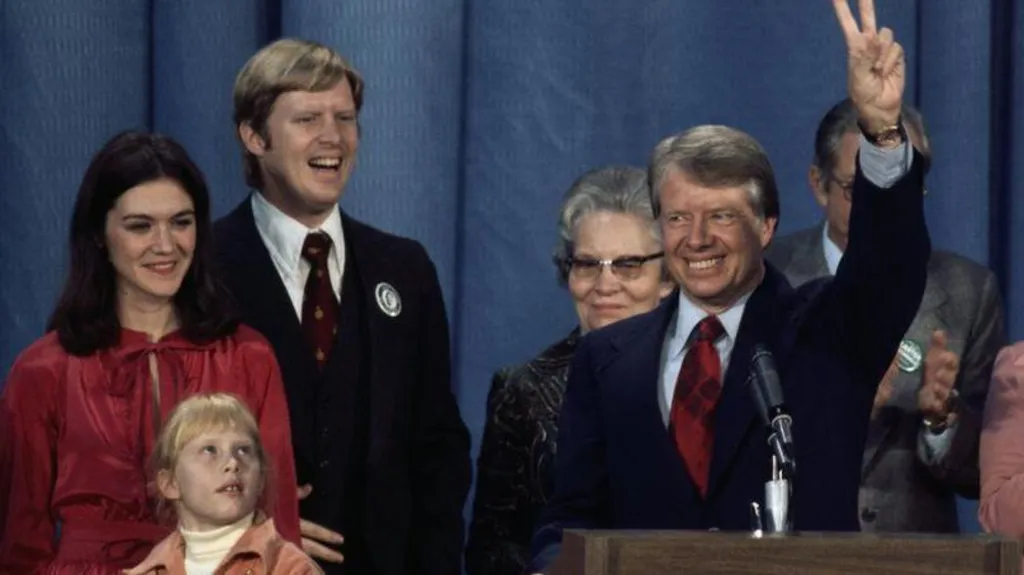
Jimmy Carter: Remembering a Centurion of Integrity and Service

America mourns!
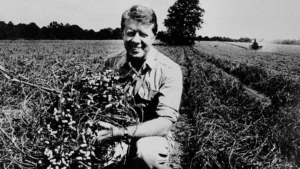
Jimmy Carter, the 39th president of the United States, who passed away at 100, leaves behind a legacy that transcends his single term in office. Rising from humble beginnings as a peanut farmer in Plains, Georgia, Carter’s journey from small-town America to the global stage was marked by a commitment to truth, justice, and service.
According to the BBC, in the aftermath of Watergate, Carter’s promise to never lie to the American people resonated with a nation yearning for integrity. He pardoned Vietnam War draft evaders, took early steps to address climate change, and brokered the historic Camp David Accords between Egypt and Israel. However, his presidency was also marred by challenges, including the Iran hostage crisis and economic struggles, which contributed to his defeat by Ronald Reagan in 1980.
Early Life and Faith
Born on October 1, 1924, Carter’s upbringing during the Great Depression shaped his values. The eldest of four children, he was raised on a Georgia peanut farm by a segregationist father and a nurse mother, whose compassion left a lasting impact. Carter’s deep Baptist faith became the cornerstone of his personal and political life.
After a stint as a Navy submarine officer, Carter returned to Georgia to revive his family’s struggling farm after his father’s death. His success in turning it around laid the foundation for his entry into politics, beginning with local offices and later the Georgia Senate, where he became an advocate for civil rights during a tumultuous era in the South.
Presidential Ambitions and Challenges
Carter’s 1976 presidential campaign capitalized on his image as a Washington outsider. His honesty and modesty resonated with voters disillusioned by political scandals. On his first full day in office, he controversially pardoned thousands of draft evaders, a decision he later described as one of his hardest.
A champion of equality, Carter appointed women to key roles and supported environmental initiatives, famously installing solar panels on the White House. Yet, his presidency faced setbacks. Rising unemployment, inflation, and a botched attempt to rescue American hostages in Iran eroded public confidence. Despite these challenges, his emphasis on diplomacy bore fruit with the Camp David Accords, a landmark peace agreement between Egypt and Israel.
He was a known champion of climate change
A Legacy Beyond the White House
Defeated but undeterred, Carter dedicated his post-presidency to humanitarian causes. Through the Carter Center, he championed human rights, eradicated diseases, and monitored elections worldwide. His efforts earned him the Nobel Peace Prize in 2002, solidifying his reputation as a global advocate for peace and justice.
In collaboration with figures like Nelson Mandela, Carter founded The Elders, a group of statesmen addressing global crises. He also devoted decades to Habitat for Humanity, helping to build homes for the underprivileged, even into his 90s.
A Life Rooted in Modesty
Unlike many modern presidents, Carter eschewed wealth and fame. He returned to his modest Plains home, valued at $167,000, choosing a life of simplicity and service over corporate opportunities. His dedication to teaching Sunday school and his lifelong partnership with Rosalynn Carter, his wife of 77 years, epitomized his grounded values.
Final Years and Reflections
Carter’s final years were marked by resilience. Battling cancer and enduring the loss of Rosalynn in 2023, he celebrated his 100th birthday surrounded by tributes to his remarkable life. In his own words, Carter once said, “You cannot divorce religious belief and public service.” This philosophy defined a life committed to justice, equality, and humility, leaving an enduring legacy as a president and humanitarian.
As the nation mourns his passing, Carter’s life stands as a testament to the power of integrity and service, reminding the world of the transformative impact of a leader driven by faith and compassion.