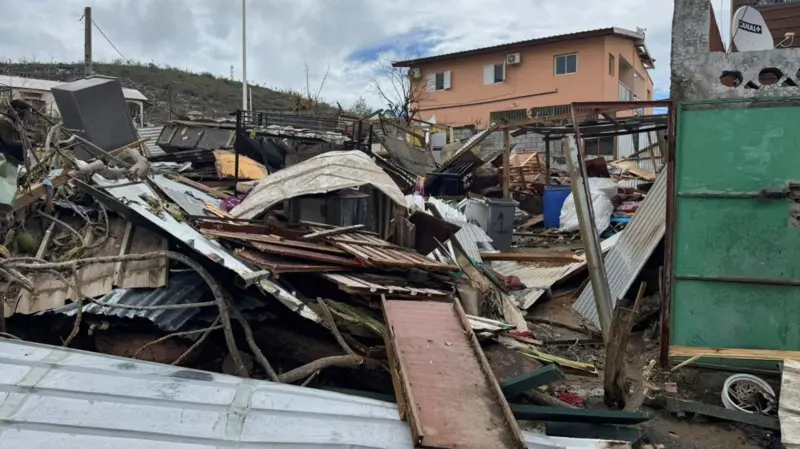

Cyclone Chido has unleashed unprecedented destruction across Mayotte, leaving the French territory isolated and grappling with immense loss. In the capital Mamoudzou, entire streets are buried under fallen trees and debris, while almost every home has suffered damage. A nurse from the main hospital reported that the facility is barely functional, amplifying the crisis for the injured and displaced.
Residents there are queuing for basic necessities like water, but with communication largely severed and roads blocked, the humanitarian response is hampered. Families are in anguish, unable to locate loved ones amidst the chaos. Scenes of flattened homes and scattered belongings underscore the profound impact of the storm, as emergency workers struggle to restore essential services.
The destruction has left the island community fractured, with survivors combing through rubble to salvage fragments of their lives. Relief efforts are underway, but for those affected, the agonizing wait for aid continues.
Chido’s devastation has not been confined to Mayotte. Northern Mozambique also felt the storm’s fury, with three lives lost, including a young girl in Nampula province. The tragedy has drawn regional solidarity. The neighboring island nation of Comoros has declared a week of national mourning in honor of the victims. This gesture carries particular significance, as Mayotte, though politically tied to France, is part of the Comoros Archipelago.
Comoros’ President Azali Assoumani stressed the need for unity in this moment of shared grief, announcing that the mourning period will last until December 22, with flags flown at half-mast. While Comoros grieves alongside Mayotte, the human and environmental toll of Cyclone Chido has spotlighted the vulnerability of these islands to increasingly extreme weather events.
For Mayotte, recovery will be long and arduous.