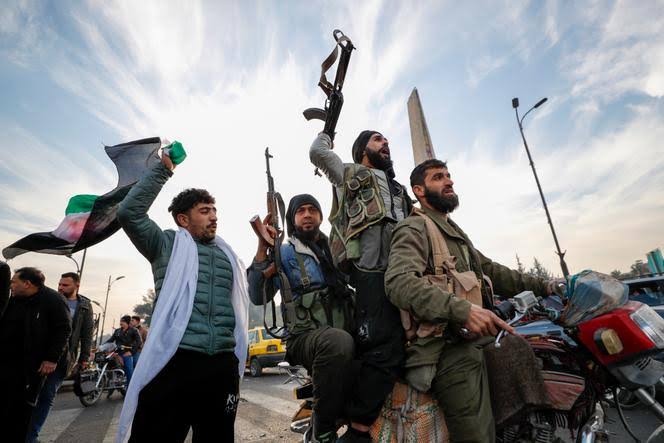

It was a brutal, yet inglorious end to an era. 6 years of thud and blood
The fall of Syrian President Bashar al-Assad marked a historic turning point in Syria’s civil war, as anti-government forces, led by Hayat Tahrir al-Sham (HTS), seized the capital Damascus after a rapid nationwide advance. Assad fled to Russia with his family, reportedly granted asylum in Moscow, ending over five decades of Assad family rule in Syria. Rebel leader Abu Mohammed al-Golani declared the victory at Damascus’ Umayyad Mosque, announcing that government institutions would operate under Assad’s prime minister until an official transition is implemented.
Syrians are in love with what they see as a better evil. Al-Golani, the rebel leader, was a member of Al-Qaeda at some point and the Islamic State in Iraq and Syria (ISIS). He was once jailed for terrorism. Syrians are happy that the Devil has overthrown Satan.
The international response has been swift too. UN Secretary-General António Guterres called for Syrians to seize this moment to rebuild, emphasizing the importance of an inclusive and peaceful future. Arab states, led by Qatar, announced plans to mediate a transition to prevent further civil unrest. In Europe, leaders such as Ursula von der Leyen pledged reconstruction support conditioned on the protection of minorities. Meanwhile, Israel expressed concerns over regional security, launching strikes on key facilities in Damascus as a preemptive measure against potential threats.
Domestically, the fall of Assad triggered a wave of freedom for political detainees. Rebels liberated thousands from detention facilities, including Sednaya Prison, notorious for systemic torture. The White Helmets, a prominent civil defense group, called the event a long-awaited victory for Syrians, marking the dawn of a new chapter for the country. Yet, uncertainty remains over governance and stability in the post-Assad era, especially as regional powers like Iran and Hezbollah may resist this dramatic shift.
With Assad’s departure, international dynamics are evolving. Iraq evacuated its embassy in Damascus, signaling regional unease. The U.S. pledged to maintain its presence in eastern Syria to prevent a resurgence of ISIS, while President-elect Donald Trump noted Russia’s withdrawal of support for Assad as a key factor in his downfall. These developments highlight the geopolitical complexity of rebuilding a war-torn nation still divided by years of conflict.
This extraordinary transformation leaves Syria at a crossroads, facing the dual challenge of healing from years of violence while establishing a viable political framework inclusive of all ethnic and religious groups.
The fall of Bashar al-Assad has ushered Syria into uncharted territory, setting the stage for a challenging and uncertain transition in the days ahead. Rebel forces, now in control of Damascus and other major cities, face the monumental task of stabilizing the country after more than 13 years of civil war. Abu Mohammed al-Jolani’s leadership, while pivotal in securing the capital, must navigate the delicate balance of power among various rebel factions, ethnic groups, and international stakeholders.
Immediate concerns include addressing the humanitarian crisis, reintegrating displaced populations, and managing liberated political detainees. The release of thousands from detention facilities has reignited demands for justice and accountability, particularly for war crimes committed during Assad’s rule. This poses a challenge for rebel leaders to establish governance that prioritizes reconciliation while avoiding renewed conflict.
Internationally, efforts will likely focus on preventing the resurgence of extremist groups like ISIS and addressing the security vacuum left by Assad’s departure. The U.S. has reiterated its commitment to a continued presence in eastern Syria, while Israel remains on high alert, wary of Iran’s response to its diminishing influence in the region. Meanwhile, Arab states and the EU are positioning themselves to mediate an inclusive political transition, ensuring all Syrians, regardless of ethnicity or sect, have a stake in the country’s future.
Economically, Syria faces immense challenges. Years of war have devastated infrastructure, industries, and basic services. Rebuilding will require international aid, but such support may come with conditions tied to human rights and democratic reforms. The diaspora’s return and the reintegration of fighters into civilian life will also test the new leadership’s ability to maintain order and drive economic recovery.
While the fall of Assad offers hope for a more inclusive Syria, the path ahead is fraught with difficulties. Ensuring stability, preventing regional spillover, and establishing legitimate governance will require both national unity and robust international cooperation. Syria stands at a critical crossroads, where the decisions made in the coming weeks will shape its future for decades to come.