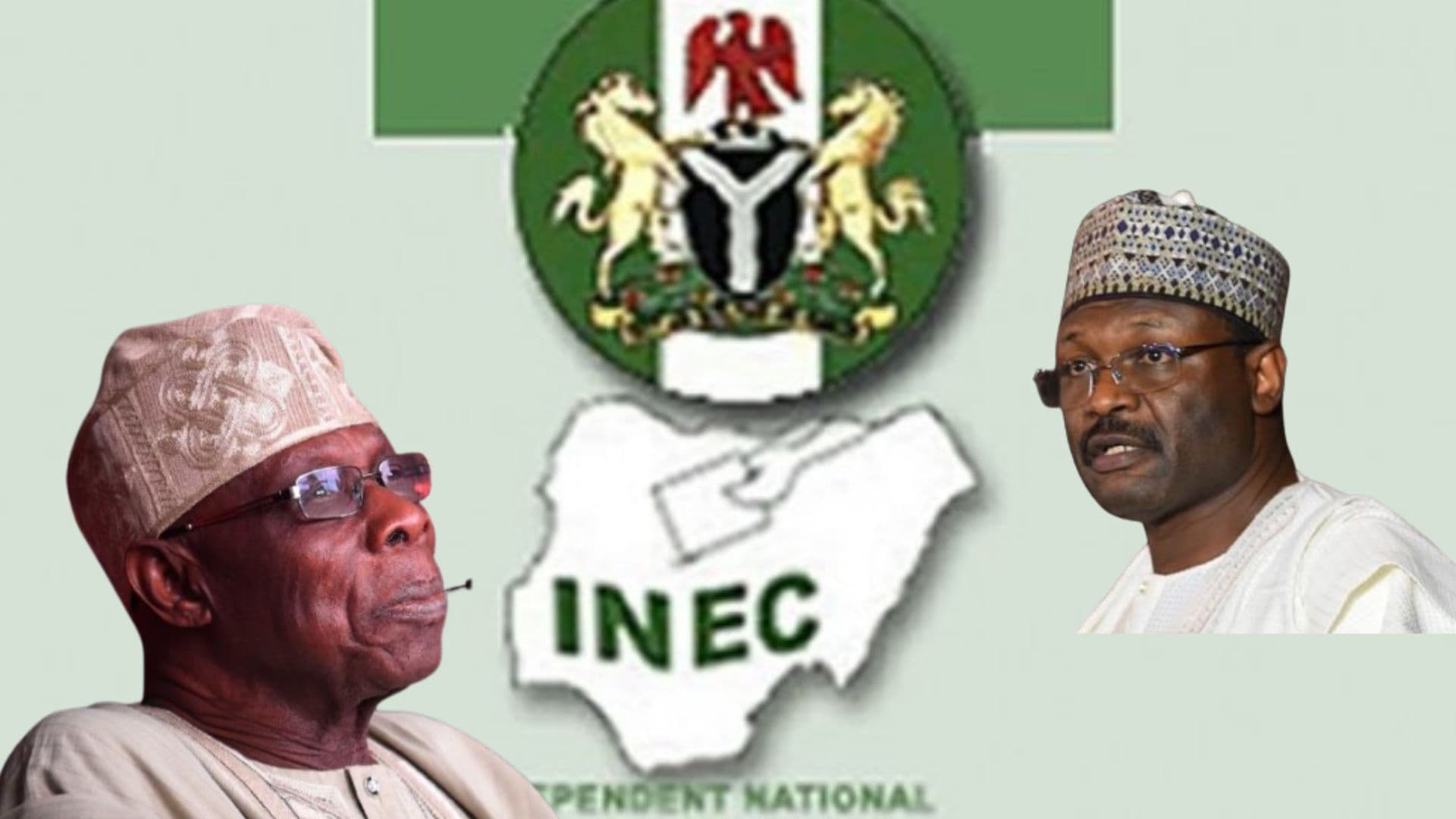

A former president of Nigeria, Chief Olusegun Obasanjo for the 1000th’ time has thrown his weight behind the handling of political affairs in Nigeria especially the electioneering process.
What is the former president talking about? Has the Independent National Electoral Commission undermined the integrity of Nigeria’s electoral system? In what way?
The piece as seen in The Guardian sheds some light into his thought process.
………………..
The integrity of any democracy hinges on its electoral system, a process meant to reflect the will of the people. Nigeria’s 2023 presidential election, touted as a crucial step in its democratic evolution, has instead become a contentious issue, with former President Olusegun Obasanjo’s open letter reigniting debates about transparency, accountability, and fairness. His allegations against the Independent National Electoral Commission (INEC) call for not just outrage but a deeper reflection on Nigeria’s democratic practices.
Obasanjo accused INEC of undermining trust by allegedly sabotaging critical technologies such as the Bimodal Voter Accreditation System (BVAS). The subsequent manual collation of results, he argued, opened avenues for manipulation. For a nation striving to strengthen its democracy, these allegations cannot be dismissed as routine post-election grievances. They touch the very fabric of public trust in institutions.
However, Obasanjo’s letter did not merely highlight irregularities; it also issued a stark warning. He urged President Muhammadu Buhari and INEC Chairman Mahmood Yakubu to act swiftly to suspend results where discrepancies were evident, warning of potential unrest if grievances were ignored. While his intervention reflects a sense of urgency, it also sparked divisive reactions.
Supporters of Obasanjo argue that his stature as a former president and elder statesman gives weight to his concerns. They see his call as a necessary push for accountability in a system often plagued by irregularities. Yet critics view his letter as inflammatory and politically motivated, questioning the propriety of his public challenge to INEC’s authority. Groups like the Yoruba Council Worldwide labeled his demands reckless, cautioning against actions that could destabilize the nation.
These conflicting narratives highlight a deeper tension between maintaining peace and pursuing justice. Elections, as imperfect as they may be, represent progress only when built on trust. While INEC has defended its processes as being within legal parameters, the broader question remains: can such assurances rebuild public confidence in the wake of perceived failures?
What makes this debate especially significant is the opportunity it presents for systemic reform. Obasanjo’s intervention, controversial as it may be, underscores the need for a thorough, nonpartisan review of Nigeria’s electoral processes. This is not merely about addressing the alleged flaws of 2023 but about preventing similar controversies in the future.
For Nigeria, the stakes are high. As Africa’s most populous nation and largest economy, its democratic health resonates beyond its borders. A credible electoral system is not just a national imperative but also a regional beacon. Countries across Africa look to Nigeria as a democratic leader; thus, its struggles and triumphs set precedents.
INEC, too, stands at a crossroads. Its credibility has been challenged before, but the allegations surrounding 2023 are particularly damning given the technological advancements introduced. The promise of BVAS and other innovations was not merely to speed up elections but to ensure transparency. Failing to deliver on this promise risks eroding not just INEC’s legitimacy but also public faith in technological solutions.
As Nigerians continue to debate the fallout of the election, one thing is clear: this moment must serve as a turning point. Electoral reform is not a luxury but a necessity. From logistical improvements to legal clarifications, every aspect of the process needs scrutiny.
Obasanjo’s letter, despite its polarizing nature, forces a critical conversation about the direction of Nigeria’s democracy. It is an opportunity not just to critique but to act, ensuring that future elections meet the standards of transparency, fairness, and accountability that citizens deserve.
Ultimately, democracy is not just about voting; it is about trust. For Nigeria, reclaiming that trust starts with addressing the flaws exposed in 2023. Only then can the nation move forward, confident in its democratic foundations.