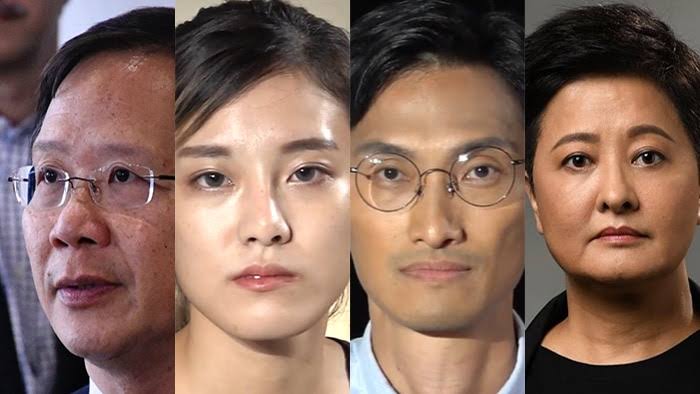

Hong Kong’s political landscape witnessed a key mmoment in history as 45 pro-democracy activists, including iconic figures like Joshua Wong and Benny Tai, were sentenced under the controversial National Security Law (NSL). Known as the “Hong Kong 47,” these individuals faced charges of attempting to subvert the government through an unofficial primary election in 2020. The trial and its outcomes highlight the complex and ongoing struggle for democracy in a city under increasing control from Beijing.
According to BBC reports, he unofficial primary election, held in July 2020, was aimed at selecting opposition candidates to gain a legislative foothold and block pro-Beijing government bills. It drew over half a million voters but quickly raised alarms among authorities, who argued it breached the NSL.
Organizers maintained that the primary was lawful under Hong Kong’s Basic Law, which guarantees certain freedoms, but the court ruled otherwise, agreeing with the prosecution that the election could have created a constitutional crisis.
Among those sentenced was Benny Tai, a scholar and law professor, who has been a central figure in Hong Kong’s pro-democracy movement since the 2014 Occupy Central protests. Tai’s commitment to fair elections and criticism of the Chinese Communist Party led to his dismissal from the University of Hong Kong and repeated imprisonment.
On Tuesday, November 19, he received a 10-year sentence, further cementing his status as a symbol of resistance.
Another prominent figure is Joshua Wong, arguably Hong Kong’s most recognizable activist. Wong’s journey began at the age of 14 and saw him leading the Umbrella Movement in 2014. His activism has made him a frequent target of arrests, culminating in solitary confinement. Despite his challenges, Wong remains defiant, declaring that neither prison bars nor arbitrary powers could silence the fight for democracy. He was sentenced to four years and eight months.
Leung Kwok-hung, or “Long Hair,” has also been a long-standing icon of political defiance. Known for his dramatic protests in Hong Kong’s legislature, Leung used bananas, balloons, and umbrellas as symbols of resistance. Arrested under the NSL, he married his partner to secure visitation rights before his imprisonment. His sentence of six years and nine months marks yet another chapter in his enduring fight against authoritarianism.
Other activists, like Claudia Mo*l, once a journalist who covered the Tiananmen Square crackdown, have also paid a heavy price. A veteran lawmaker and founding member of the Civic Party, Mo resigned from the legislature in protest against Beijing’s increasing grip on the city. Her arrest was dramatic, and her subsequent sentence of four years and two months highlights the risks faced by those opposing the government.
The crackdown extends beyond political figures to activists like Jimmy Sham, a vocal LGBTQ advocate. Sham, who led one of Hong Kong’s largest pro-democracy groups, has faced violent attacks and now a four-year sentence. Similarly, Gwyneth Ho, a journalist turned politician, gained prominence during the 2019 protests after live-streaming an assault on herself. Her seven-year sentence underscores the increasing restrictions on freedom of speech and press in the city.
These trials reveal the profound challenges faced by activists under the NSL, which critics argue has stifled dissent and eroded Hong Kong’s freedoms. Most of the defendants have been in pre-trial detention since 2021, reflecting the law’s harsh application. Though some, like barrister Laurence Lau, were acquitted, the broader crackdown illustrates Beijing’s determination to silence opposition voices.
The sentences have drawn global attention and criticism, with human rights organizations and democratic nations decrying the trials as unjust. The NSL has fundamentally changed Hong Kong’s political landscape, creating an environment where activism is increasingly dangerous and often criminalized.
As these pro-democracy leaders face years behind bars, their resilience continues to inspire movements worldwide. Their sacrifices underscore the high stakes of advocating for democracy in an authoritarian regime and remind the world of the enduring value of freedom and justice.