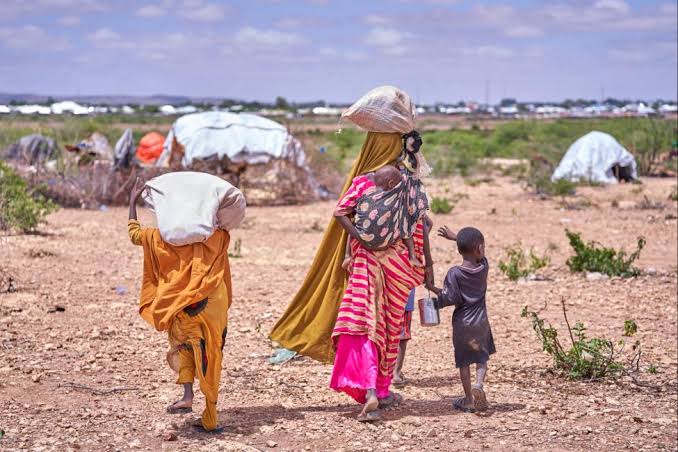
Bridging the Climate Finance Gap: Africa’s Struggle and the Global Responsibility to Ensure Resilience

Climate finance is critical to Africa’s fight against climate change, yet the continent continues to face significant challenges in accessing adequate funds.
Despite being one of the least contributors to global greenhouse gas emissions (less than 4%), Africa is disproportionately affected by climate impacts. According to a recent African Union report, the continent only receives around 2% of global climate finance, a staggering disparity when considering its vulnerability and needs.

The climate finance gap is enormous, with Africa needing approximately $2.8 trillion between 2020 and 2030 to implement the targets set in their Nationally Determined Contributions (NDCs) under the Paris Agreement. However, the continent only received $30 billion in 2021-2022, a mere 11% of the required annual $277 billion. This shortfall severely hampers efforts to build resilience against climate change, particularly in sectors like agriculture and water, which are crucial to the livelihoods of many Africans.
Although climate finance flows to Africa have increased by about 24% annually over the past decade, the funds allocated are insufficient for Africa’s needs. In 2011-2021, East Africa received the highest climate finance, while Central Africa received the least. The energy sector attracted the largest share of funding, followed by agriculture, water, and transport. There is also an imbalance in the type of climate action financed, with more funding allocated to mitigation than adaptation, even though adaptation is more urgently needed for Africa.
A significant portion of climate finance is delivered through grants and concessional loans, while non-concessional loans and innovative financial instruments like equity and guarantees are underutilized. This reliance on grants and concessional loans limits the capacity for private sector involvement in climate-related sectors. Addressing this requires leveraging more creative financial tools that could de-risk private investments in climate action.
Accessing climate finance in Africa is hindered by internal and external challenges. Weak institutional capacity is a major barrier, with inadequate technical capabilities and frameworks preventing countries from effectively accessing and utilizing climate funds. The lack of coordination across sectors and insufficient data for project development are significant obstacles. There is also a need for clearer policy frameworks to guide climate investment priorities, which would help signal opportunities for both public and private sectors.
However, there have been positive steps toward climate finance mobilization. The African Development Bank, along with several multilateral development banks, has been a key player in providing finance for mitigation and adaptation projects. However, there is still a need for global actors to step up their commitments. Recent data from the World Bank indicates a 10% increase in climate finance disbursements in fiscal year 2024, highlighting a growing acknowledgment of the need for enhanced financial support, yet this is still far from bridging Africa’s finance gap.
Other Challenges
Another major challenge is the unequal distribution of funds among African countries. More prosperous regions like Northern and Southern Africa receive relatively more climate finance than economically disadvantaged areas like Central Africa. This inequity exacerbates the vulnerability of already marginalized communities and highlights the importance of a more balanced allocation that aligns with the varying needs across different regions.
The global community has made numerous pledges at events like the Conference of the Parties (COP) to boost climate finance for developing nations, but these promises are not always fulfilled. The reliance on Official Development Assistance (ODA) and bilateral sources limits the scalability of finance. Going forward, there is an urgent need for the effective implementation of innovative funding mechanisms, such as climate bonds and risk-sharing tools, to enhance resilience across African nations.
Closing the Gap
To move ahead, international cooperation must be enhanced, and African nations need support to build institutional capacity. Such efforts could include technical assistance for project development, establishing clear regulatory frameworks, and fostering partnerships with the private sector. Bridging the climate finance gap is not just an African issue but a global responsibility, given the interconnected nature of climate impacts.
The path to climate resilience in Africa will require not just more funding but better-quality finance that is accessible, predictable, and aligned with the continent’s development goals. A combination of grants, concessional loans, private sector engagement, and effective policymaking can help close the climate finance gap and empower Africa to face the challenges of a changing climate.