Open Defecation Starts with You: A Call to Personal and Collective Responsibility

Open defecation remains a serious health and environmental challenge in Nigeria, with nearly 25 percent of the population still practicing it in 2024. Despite government efforts to address this, progress remains slow, and the situation persists, particularly in rural areas where proper sanitation facilities are lacking. While the state of Jigawa has made strides in becoming open defecation free (ODF), other states in Nigeria including Oyo must take responsibility to end the menace. But what can residents do to hasten this change?
A major factor in combating open defecation is self-determination. According to public health experts, personal commitment to hygiene can significantly reduce the dangers posed by open defecation—not only for individual households but also for the wider public health system. With an estimated 48 million Nigerians still defecating in the open, the issue is far from resolved, leaving many vulnerable to waterborne diseases and environmental hazards.
An environmentalist, Olusola Sokoya, sees open defecation as a dire issue requiring immediate and deliberate action. He stresses that while stakeholders, including the government, have a role to play, the fight against this social anomaly starts with individuals. “The government cannot do it all. It is the responsibility of every citizen to prioritize sanitation in their homes,” Sokoya remarked during an interview.
Sokoya points out a few ways citizens can take action. First, he emphasizes the importance of building and maintaining functional toilets in every household. Second, he advocates for regular hygiene education within communities to encourage good practices, such as proper handwashing.
Third, Sokoya encourages active involvement in local sanitation efforts, suggesting that Nigerians take it upon themselves to monitor their surroundings and hold their communities accountable.
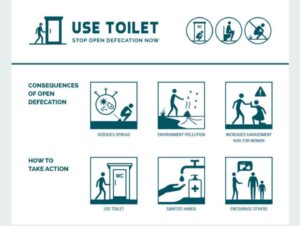
With the United Nations Children’s Fund, UNICEF, working double shifts to check out this menace in the virulent parts, government and non-governmental organizations (NGOs) also must play a pivotal role to complement ongoing efforts.
Sokoya who commended the government’s continued collaboration with NGOs to raise awareness about the dangers of open defecation, believes these efforts need to be backed by stricter enforcement. Sokoya supports legal action against those caught defecating in public, arguing that without deterrents, the practice will continue to thrive.
On the other hand, another concerned individual, Akindele Akeem takes a slightly different approach – he highlights the lack of public toilets as a major barrier to solving the problem. Akeem calls on the government to erect more public sanitation facilities, particularly in congested areas. “It’s hard to enforce laws when people don’t have the basic infrastructure needed to comply,” Akeem stated, adding that the few public toilets available are often in dire need of repair.
Akeem also advocates for the reintroduction of environmental health officers, known locally as “Wole Wole,” who used to enforce sanitation laws. In places where these officers are no longer present, Akeem believes their return would help enforce regulations and educate the public on proper hygiene practices.
Households, however, must play their part. As Akeem emphasized, “Parents should enforce handwashing habits and other hygiene practices within the home.” Without this, efforts to end open defecation will fall short, regardless of government interventions.
The fight against open defecation has been ongoing for years. In 2019, President Muhammadu Buhari signed Executive Order 009 to tackle the issue. That same year, the Ministry of Water Resources, in partnership with UNICEF, launched the “Nigeria Open-Defecation-Free by 2025: A National Road Map.” Despite these initiatives, the 2025 target seems ambitious unless there is increased commitment at the grassroots level.
Ultimately, the responsibility for ending open defecation lies not only with government agencies or NGOs but with every Nigerian. As the slogan says, “The ball is in your court.”
Whether it’s building a toilet, practicing proper hygiene, or holding your community accountable, it starts with you!