Powering the Future: How Nigeria Can Learn from Switzerland’s Renewable Energy Revolution

The World is shifting, Nigeria needs to walk away from its malignant stygian.
As the global energy landscape shifts, Nigeria can draw critical lessons from Switzerland’s innovative approaches to renewable energy.
Globally, about 30% of electricity is now generated from renewable sources like solar, wind, and hydro power, up from 20% in 2000. By 2050, the International Energy Agency (IEA) predicts that nearly 90% of the world’s electricity will come from renewables. Nigeria can draw knowledge from that.
In Switzerland stoday, 75% of its electricity is generated from renewable sources, mainly through hydroelectric power. This achievement reflects a deep commitment to sustainability, yet the Swiss are pushing boundaries even further. Solar panels are now widespread across the country, including in unconventional places like motorways. Despite the success, a significant challenge remains: the variability of solar and wind power, which often results in excess energy production, particularly in the summer months.
Swiss Energy
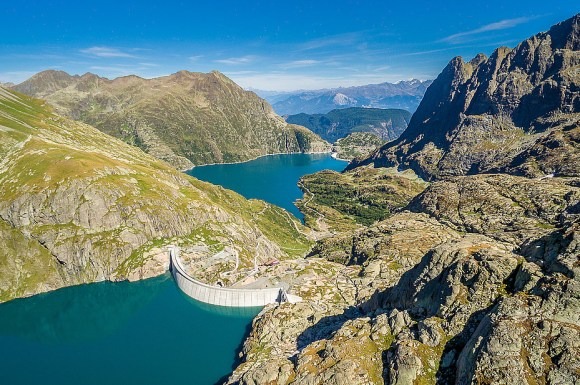
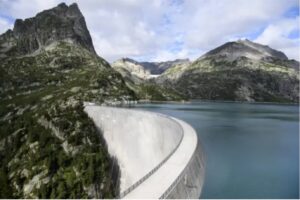
Switzerland’s answer to this challenge lies in advanced energy storage systems. The country boasts around 100 reservoirs dedicated to hydroelectric production, with about 15 equipped with pumping systems. This infrastructure allows Swiss power stations to store and release energy as needed, ensuring a consistent power supply even when renewable energy production fluctuates.
In July 2022, Switzerland inaugurated one of Europe’s most powerful pumped-storage power stations in Valais. This facility acts as a giant “water battery,” helping to stabilize energy supply across the continent by compensating for the inconsistencies in solar and wind power generation.
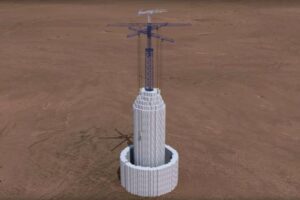
Switzerland is also exploring innovative technologies to further enhance its energy storage capabilities. The start-up Energy Vault has developed a gravity-based storage system that uses concrete blocks to store and generate electricity. When there’s surplus green electricity, these blocks are hoisted into a tower, and as energy demand rises, they’re released, generating electricity through gravity.
This novel approach has already attracted international attention, with operational plants in China and the United States.
Nigeria, facing its own energy challenges and the looming threat of climate change, can benefit from these Swiss innovations. However, embracing renewable energy sources and investing in advanced storage solutions could significantly enhance the country’s security. For instance, Nigeria’s abundant water resources could be harnessed for hydroelectric power, similar to Switzerland’s model, while solar energy could be maximized through the development of efficient storage systems.
Moreover, the concept of green hydrogen, which Switzerland is advancing to achieve emission-free mobility, offers a promising avenue for Nigeria to explore. Recall that in 2020, Switzerland launched the world’s first fleet of hydrogen-powered commercial trucks, and by June 2023, it had inaugurated its first hydrogen refueling station on the national motorway network. This shift towards green hydrogen not only supports sustainable transportation but also reduces dependence on fossil fuels—a crucial step for Nigeria, where transportation significantly contributes to carbon emissions.
Thus, Switzerland’s innovations offer a blueprint for Nigeria to follow. By learning from Switzerland’s example, Nigeria can not only address its energy needs but also contribute meaningfully to global efforts against climate change, securing a sustainable future for generations to come.