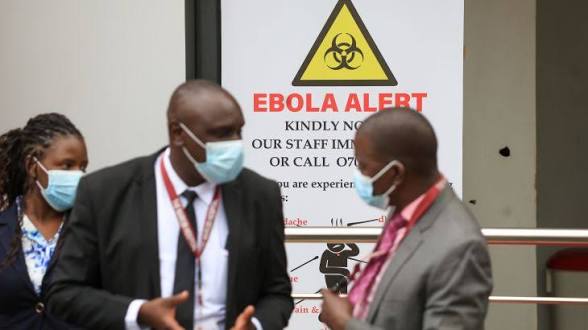

Nigeria has confirmed its first case of Ebola in the ongoing outbreak affecting parts of Africa, after a woman who recently travelled from Uganda tested positive for the virus in Abuja.
It has raised panic alerts as health agencies make room for containment.
Health Minister, Muhammad Ali Pate who announced the development on Tuesday, informed that health authorities had begun tracing 44 people who may have come into contact with the patient.
According to the minister, the woman arrived in Nigeria on an international flight from Uganda, one of the countries affected by the current outbreak, which originated in the Democratic Republic of Congo (DRC).
She reportedly developed symptoms on October 7 and was admitted to a private hospital in Abuja on October 11 before subsequent testing confirmed the infection.
Pate said the government was taking urgent steps to prevent further transmission of the virus.
“We are doing everything possible to contain this case by tracing all contacts the individual may have had,” he said.
The Nigeria Centre for Disease Control and Prevention (NCDC) had earlier intensified surveillance and preparedness measures following reports of Ebola infections in Kenya, including efforts to strengthen early detection, isolation, laboratory diagnosis, contact tracing and infection prevention in healthcare facilities.
The country also established an Ebola task force in June to coordinate its preparedness and response measures.
When the task force was announced, Femi Gbajabiamila, Chief of Staff to President Bola Tinubu, said the government was working to avoid the confusion and emergency response challenges associated with Nigeria’s previous Ebola outbreak.
The latest case comes amid a wider outbreak of Bundibugyo ebolavirus, a strain responsible for infections concentrated largely in the DRC. Uganda and Kenya have also reported cases linked to the ongoing public health emergency.
According to reports, the outbreak has recorded more than 9,000 cases and over 4,300 deaths, although the overwhelming majority of infections and fatalities remain in the DRC.
Ebola is a severe viral disease that can spread through direct contact with the blood or other bodily fluids of infected people and contaminated materials. Symptoms may include fever, fatigue, muscle pain, vomiting and diarrhoea, with severe cases potentially resulting in internal or external bleeding and organ failure.