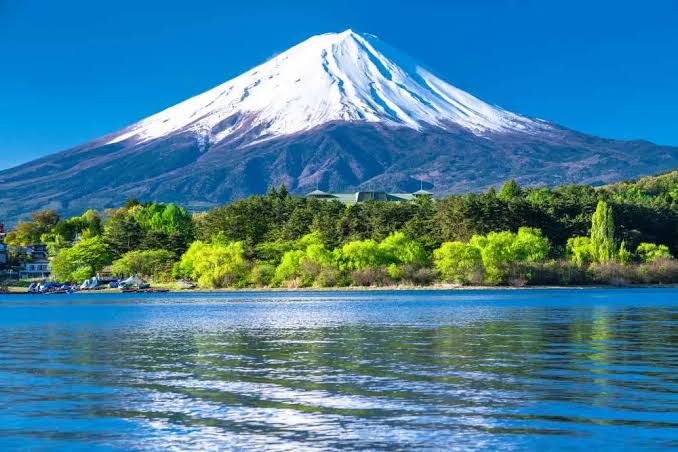

There are new beginnings even at a dead end, but on Mount Fuji, reaching the end of the trail unprepared could soon come with a bill. It’s a small price for redemption.
Japan’s Yamanashi prefecture is preparing to make climbers pay for helicopter rescue operations if they attempt to scale Mount Fuji outside the official climbing season and subsequently require emergency assistance.
The measure, expected to take effect from next year, is part of a broader effort by authorities to discourage reckless and poorly planned climbs on Japan’s iconic peak, particularly during the months when its slopes become considerably more dangerous.
Yamanashi officials are also planning to require anyone intending to climb Fuji during the off-season to submit a detailed climbing plan in advance. The off-season runs from early September until July of the following year, although authorities strongly advise the public against attempting the climb during this period.
Yamanashi Governor Kotaro Nagasaki said the new measures were intended not simply to punish climbers, but to make them understand the risks involved in venturing onto the mountain when conditions are less forgiving.
“We ask the general public to refrain from climbing during the off-season,” Nagasaki said on Monday, adding that the authorities hoped the measures would make people reconsider what climbing Mount Fuji in winter actually entails.
According to The BBC, the proposed rescue charge will draw on an existing system in neighbouring Saitama prefecture, where helicopter rescue services in certain mountainous areas cost 8,000 yen, about $51, for every five minutes of operation. The Yamanashi authorities are expected to use the arrangement as a reference in determining the cost of rescuing off-season climbers on Fuji.
This development comes amid growing concern over an increase in off-season and unplanned attempts to climb the mountain. Authorities in both Yamanashi, which oversees the northern side of Fuji, and Shizuoka prefecture, which governs the southern side, have reported cases in which climbers ventured onto the mountain without adequate preparation and were subsequently stranded.
Shizuoka is also tightening restrictions. Authorities there plan to impose penalties on people who attempt off-season climbs without registering and increase efforts to prevent climbers from entering areas that are closed during the restricted period. Unlike Yamanashi, however, Shizuoka has not announced plans to charge climbers for helicopter rescues.
Mount Fuji attracts roughly 200,000 hikers to its summit every year, but the mountain is a very different proposition outside the official climbing window, which generally runs from July to early September.
Although climbing is not completely prohibited during the off-season and access remains possible up to the fifth of Fuji’s ten stations, much of the infrastructure that supports climbers disappears once the official season ends. Most mountain huts and toilets close, while weather conditions can become significantly harsher and trails more treacherous.
For authorities, the concern is therefore not simply about people reaching the summit. It is about what happens when an avoidable adventure turns into an emergency, potentially placing rescuers at risk and diverting public resources to climbers who ignored repeated warnings.
The new rules send a simple message to anyone tempted to challenge Fuji outside its season: the mountain may remain standing, but the safety net around it does not operate as usual.
So, when the climb ends at a dead end, the rescue may no longer come free.