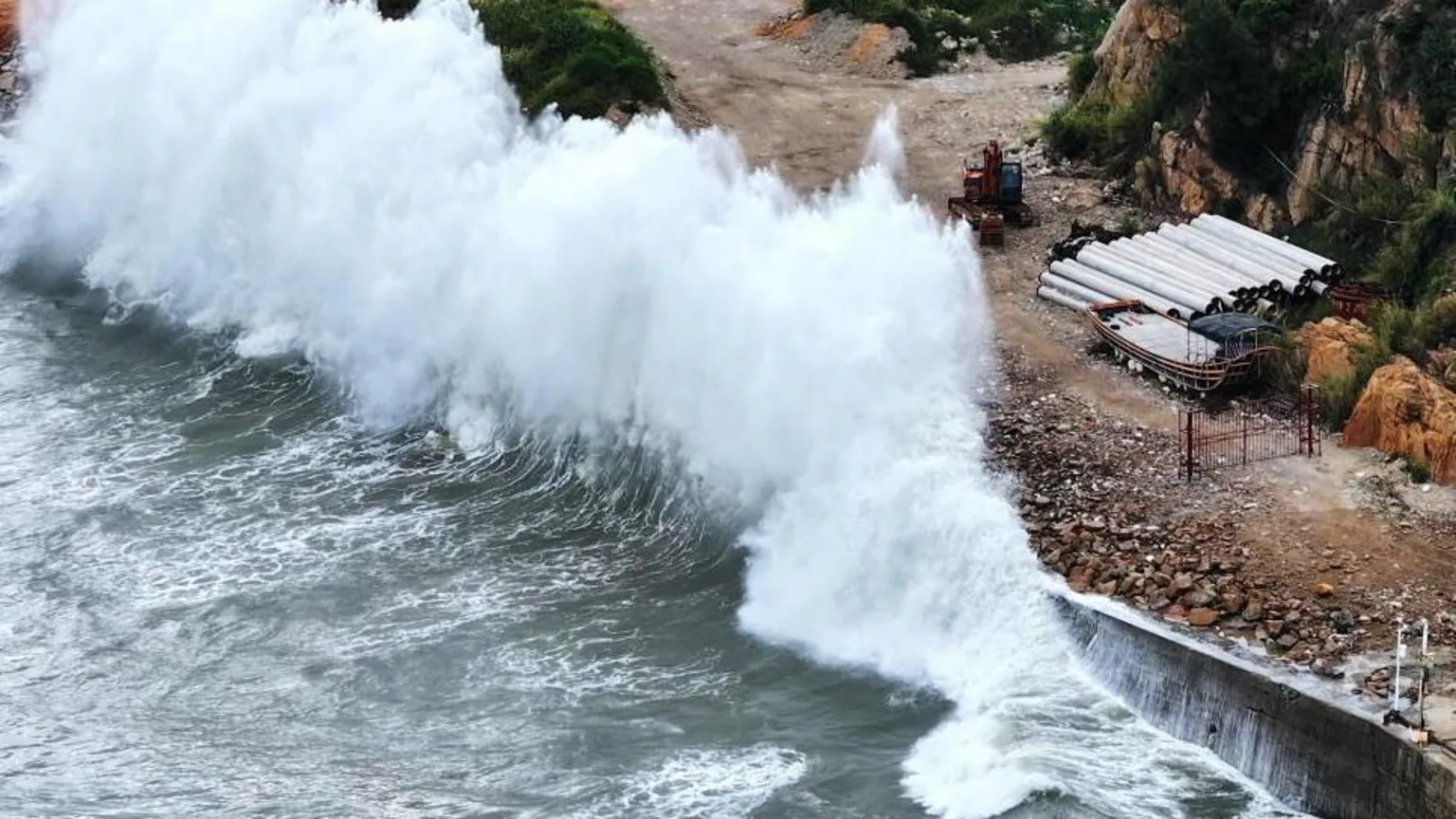

Authorities in China have evacuated more than one million people from vulnerable communities in eastern China, including Shanghai, as Typhoon Dolphin brought powerful winds, torrential rain and widespread disruption to the region.
The typhoon made its first landfall in Yuhuan, Zhejiang Province, at about 17:30 local time, packing maximum sustained winds of 150km/h (94mph), according to meteorological authorities. It later made a second landfall near Wenzhou about an hour later.
The storm triggered extensive transport disruptions, with about 1,400 flights cancelled in Shanghai alone as authorities moved to protect residents from the worsening weather.
Chinese authorities had earlier placed the storm under the country’s highest-level red alert before downgrading it to a tropical storm on Monday as it weakened while moving inland.
Despite the downgrade, officials continued to warn of torrential rainfall, severe flooding and landslides across several provinces through Wednesday.
Heavy rainfall was forecast for Shandong, Henan, Hubei, Anhui, Jiangsu and Zhejiang provinces, as well as Shanghai.
Images and footage from Shanghai showed residents wading through flooded streets, while some ground-floor businesses in the city’s former French Concession were inundated with water.
Several major tourist attractions have also been closed or partially shut, including sections of Disneyland and Legoland, as well as viewing platforms along Shanghai’s Bund waterfront.
Authorities in Wenzhou said about 900,000 residents had been relocated and more than 1,000 emergency shelters opened. In nearby Taizhou, approximately 390,000 people were evacuated from their homes.
Parts of Zhejiang are expected to receive between 250mm and 500mm of rainfall*l over the coming days, increasing concerns about flooding and landslides.
A nine-year-old boy from Wenling in Zhejiang was also reported missing after being swept into the sea, although Chinese authorities had not confirmed any deaths at the time of the report.
In Hangzhou, the capital of Zhejiang, authorities waived parking charges in public parking facilities to allow residents to use them as temporary shelters amid the strong winds and flooding.
Further south in Fujian Province, maritime authorities suspended dozens of passenger ferry services and halted more than 100 offshore construction projects.
According to China’s state broadcaster CCTV, the storm travelled approximately 6,000 kilometres before reaching land, giving it an unusually long lifespan compared with an average typhoon.
Authorities have urged residents in affected areas to remain indoors, avoid unnecessary travel and follow evacuation and emergency instructions as the storm continues to weaken while moving inland.