

Now that AI is reliving itself in everything including fashion, what’s left to learn?
Artificial intelligence is rapidly transforming the global fashion and beauty industry, changing everything from clothing design and inventory management to customer service and online shopping. Yet, despite the growing adoption of AI-powered technologies, industry experts warn that workforce training has failed to keep pace, creating a widening gap between technological advancement and employee readiness.
A recent BoF Careers survey involving nearly 3,000 fashion professionals across 98 countries found that while companies are investing heavily in AI tools, far fewer are equipping employees with the skills needed to use them effectively.
The findings showed a broader shift across the industry as brands increasingly rely on artificial intelligence to improve efficiency, reduce costs and personalise customer experiences.
According to the State of Fashion 2025 report, half of fashion executives identify product discovery as the most valuable application of generative AI. Consumer demand also appears to be driving adoption. Research by McKinsey & Company found that 82 per cent of shoppers want AI to reduce the time spent researching products before making purchasing decisions.
One of online fashion retail’s biggest challenges has long been consumer uncertainty over whether clothes will fit, suit their body type or even look as expected.
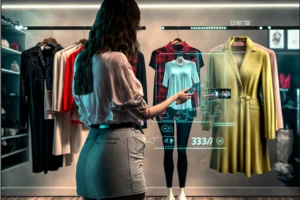
AI-powered virtual fitting rooms are beginning to address these concerns by allowing shoppers to upload photographs, digitally try on outfits, compare colours and view garments from multiple angles before making purchases.
Retailers believe these innovations could significantly reduce product returns while improving customer satisfaction.
Generative AI is also changing how brands engage consumers. AI tools now generate product descriptions, marketing campaigns, digital fashion models and even product photography, reducing production costs and speeding up content creation.
McKinsey reports that 45 per cent of fashion executives consider AI-driven marketing one of the industry’s biggest opportunities for value creation.
Customer service has also evolved through AI-powered assistants capable of providing styling recommendations, size guidance, multilingual support, order tracking and return processing through natural, conversational interactions.
Beyond customer engagement, AI is becoming a critical tool for managing fashion supply chains.
Fashion companies lose billions of dollars each year due to overproduction, underproduction and inaccurate inventory planning. AI systems now analyse historical sales data, weather patterns, local demand, seasonal trends and economic conditions to forecast demand more accurately.
The technology also helps optimise shipping routes, predict manufacturing delays, monitor supplier performance and improve warehouse operations, resulting in lower operating costs and faster deliveries.
Global brands including Zara, H&M, Nike, LVMH, ASOS and Shein have already integrated AI into areas such as inventory planning, trend analysis, personalised recommendations and production forecasting.
What Are The Sustainability Gains and Trade-offs
The fashion industry remains one of the world’s biggest contributors to environmental waste, with millions of unsold garments discarded annually because of poor demand forecasting and fast-fashion production models.
It is widely believed that AI could help tackle this challenge by enabling brands to produce smaller, data-informed collections, reduce unnecessary product sampling, optimise material usage and improve logistics.
However, AI itself comes with environmental costs. Large-scale AI systems require enormous computing power, electricity and water to operate data centres, creating new sustainability concerns even as they help reduce waste elsewhere.
Legal and Ethical Questions
As AI-generated creative content becomes more common, legal disputes over copyright and intellectual property are becoming increasingly prominent.
Many generative AI models are trained using existing creative works, raising concerns that their outputs may closely resemble copyrighted designs, artwork or characters.
One of the most high-profile legal battles emerged in 2025 when entertainment giants Disney and Universal sued AI company Midjourney, alleging the platform generated unauthorised images of copyrighted characters including Darth Vader and the Minions. The case has become a landmark dispute over how AI systems are trained and whether their outputs infringe existing intellectual property rights.
Industry leaders are also prioritising stronger governance frameworks to address data privacy, copyright protection and responsible AI deployment.
Artificial intelligence is expected to automate many repetitive tasks across the fashion value chain rather than eliminate entire professions.
Routine activities such as product tagging, inventory forecasting, visual merchandising recommendations, social media content creation, customer support and basic graphic design are increasingly being handled by AI systems.
As a result, demand for some entry-level roles, including design assistants, merchandising coordinators, customer service representatives and content production staff, may decline.
At the same time, entirely new career opportunities are emerging. Companies are recruiting AI fashion designers, prompt engineers, AI stylists, data analysts, digital product managers, AI model trainers and AI governance specialists.
At this rate, workers are expected to develop competencies in artificial intelligence, data literacy, prompt engineering, digital marketing, creative direction and effective collaboration between humans and AI.
Rather than replacing fashion professionals outright, AI is expected to automate repetitive tasks while allowing designers and creative teams to focus on innovation, storytelling and brand identity.
Opportunities for Nigerian Fashion
For Nigerian designers and fashion entrepreneurs, AI presents an opportunity to compete more effectively on the global stage.
Access to AI-powered design software, merchandising tools, marketing platforms and market intelligence could lower barriers to international expansion while improving operational efficiency for small and medium-sized fashion businesses.
However, experts caution that overdependence on AI could also result in generic designs that lack the originality and cultural authenticity that distinguish successful fashion brands.
As artificial intelligence becomes embedded across the fashion industry, educators are facing fresh questions about the relevance of traditional fashion training.
Rather than making fashion schools obsolete, industry observers argue that institutions must evolve by combining core design principles with emerging digital skills, including AI applications, data analytics, digital product development and creative technology.