
For all the political turbulence surrounding climate change, the numbers tell a remarkably different story. Far from stalling, the global clean economy is experiencing one of the most significant expansions in modern history, growing sixfold over the last decade and reshaping the world’s energy landscape in ways that would have seemed improbable only a few years ago.
Today, more than 90 per cent of new power investments worldwide are flowing into renewable energy. In 2025, renewables overtook coal to become the largest source of electricity globally, marking a historic turning point in the transition away from fossil fuels. Successive oil and gas price shocks, combined with concerns over energy security, have strengthened the economic case for cleaner alternatives, making renewable energy not merely an environmental imperative but an increasingly attractive business decision.
Yet despite these gains, climate advocates are confronting an unexpected challenge. The science is stronger than ever, the economics increasingly compelling, and technological advances accelerating. But public confidence in institutions and political systems remains fragile, creating fertile ground for populist movements that often frame climate policies as elitist or disconnected from ordinary people’s concerns.
Paradoxically, surveys across multiple countries consistently reveal that most people actually support climate action. The problem, experts say, is perception. Citizens routinely underestimate how many others share their views, creating what researchers describe as a “false consensus gap” that weakens public momentum for change.
Like sports washing, this disconnect has been compounded by what campaigners call “green hushing”, the tendency of governments, corporations and even media organisations to understate or inadequately communicate climate successes. The result is that many people remain unaware that progress is occurring at a pace far faster than commonly assumed.
“Climate action makes economic sense, but economics alone is not enough,” advocates increasingly argue. “Societal transformation requires trust, participation and sustained engagement.”
That challenge has given rise to a growing international movement designed to bring climate conversations closer to communities rather than leaving them confined to conference halls and annual summits.
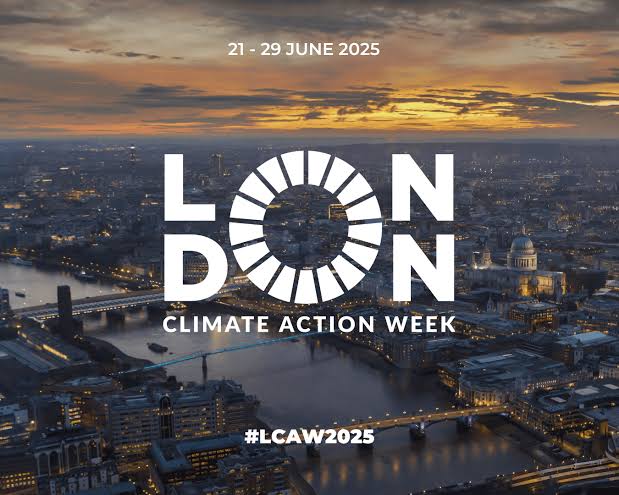
At the forefront of this effort is London Climate Action Week (LCAW), which has evolved into one of the world’s largest climate engagement platforms. What began as a modest initiative has exploded into more than 1,300 events in 2026, transforming the British capital into a citywide hub for climate discussions, innovation and activism between June 20 and 28.
The model is now spreading far beyond London. Sister climate action weeks have emerged in cities including Shanghai, Rio de Janeiro, Bangkok, Zurich and Baku, creating a globally connected but locally rooted network that seeks to build support for climate solutions from the ground up.
Unlike the annual United Nations climate conferences, which focus heavily on diplomatic negotiations, these initiatives emphasize practical implementation and public participation. They bring together communities, schools, businesses, cultural institutions and professional groups, recognising that societal change cannot be achieved through government policy alone.
Supporters see these weeks as extensions of the United Nations’ Global Climate Action Agenda, a platform intended to maintain momentum between COP meetings and ensure that climate commitments translate into tangible action on the ground.
That reality means winning public trust may ultimately prove as important as advancing clean technologies. The challenge is no longer solely about convincing people that climate change is real or that renewable energy works. Increasingly, it is about demonstrating that climate policies serve communities, create jobs, enhance security and improve everyday lives.
As the clean economy continues its rapid ascent, proponents argue that the conversation around climate change must evolve as well. Facts and figures matter, but so do stories, shared experiences and institutions capable of commanding public trust.
Because while the green transition may be gathering unstoppable economic momentum, its long-term success will depend on something far less technological and far more human: society’s willingness to believe in it.
Register HERE
And that, many observers suggest, is a conversation that cannot wait until the next COP summit.