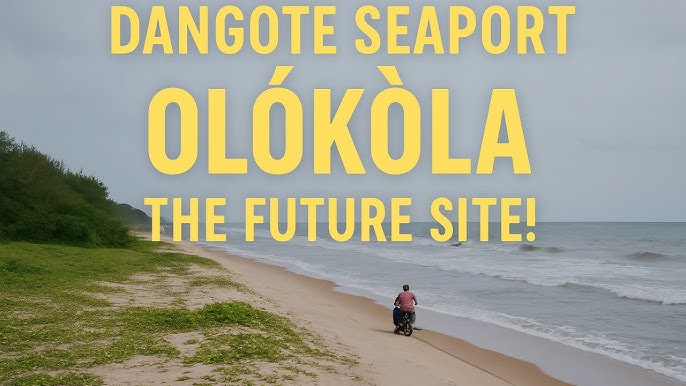

Nigeria’s richest businessman, Aliko Dangote is on the move again, this time to Olokola. This is another bold wager on the country’s industrial future, unveiling plans for what could become one of Africa’s largest integrated industrial and free trade zones in Ondo State.
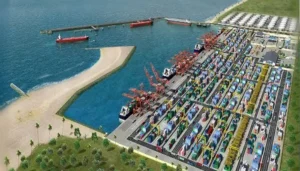
The ambitious project, to be located in Olokola, is designed to tackle one of the biggest obstacles facing investors in Nigeria: the absence of reliable infrastructure. By providing dedicated power, water, logistics and energy supply, the proposed zone seeks to eliminate many of the bottlenecks that have discouraged manufacturers and slowed industrial growth for decades.
Dangote announced the initiative on Monday during a courtesy visit to Ondo State Governor Lucky Aiyedatiwa in Akure, describing the project as far more than a traditional free trade zone.
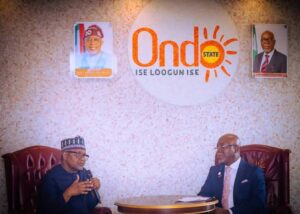
“We want to create the biggest free trade zone where investors can just come and plug in. We will generate power, provide infrastructure and remove the bottlenecks around doing business,” he said.
The billionaire industrialist explained that the vision behind the project stems from the country’s long-running infrastructure deficit, particularly chronic electricity shortages that have constrained manufacturing and forced many businesses to rely on expensive self-generated power.
According to him, the Olokola hub will feature an independent energy system and an east-west gas corridor capable of supporting energy-intensive industries, thereby providing manufacturers with a stable operating environment.
For Dangote, the announcement also represents unfinished business.
Years ago, plans to develop investments in Olokola were shelved because of operational difficulties, prompting the conglomerate to shift many of its major projects to Lagos. But nearly two decades later, the group is returning to the drawing board with renewed optimism.
Dangote revealed that contractors are expected to mobilise to the site within the next three to four months, while full-scale construction is scheduled to commence in the last quarter of the year.
He also extended an invitation to the Ondo State Government to participate directly in the venture, requesting that the state nominate a representative to sit on the board of the industrial zone to ensure smooth coordination and implementation.
Beyond infrastructure, the project is expected to become a major driver of employment and economic activity across Ondo State and neighbouring regions. Dangote pointed to the transformative impact of similar investments around Lagos, where industrial clusters have generated thousands of jobs and stimulated broader economic development.
Governor Lucky Aiyedatiwa welcomed the proposal, describing it as a significant milestone in the state’s industrialisation agenda.
According to the governor, a technical committee has already been established to work with the Dangote Group on critical issues, including land acquisition, legal frameworks, operational matters and engagement with host communities.
He pledged the state’s readiness to appoint a representative to the board of the project, noting that the investment aligns with his administration’s vision of positioning Ondo as a leading industrial destination in the South-West.
Aiyedatiwa also highlighted the state’s strategic advantages, including its location along the Lagos-Calabar Coastal Highway corridor and its deep seaport licence, both of which could strengthen international trade and attract global investors.
In addition, the governor disclosed that limestone deposits in the state had been tested and found suitable for industrial use, creating prospects for future expansion of cement production and other mineral-based industries.
If realised, the Olokola project would mark one of the most ambitious industrial undertakings in Nigeria since the development of the Dangote Refinery and Lekki Free Zone.
For a country eager to diversify away from oil and create jobs for its expanding population, the success of Olokola may prove to be more than just a business venture.