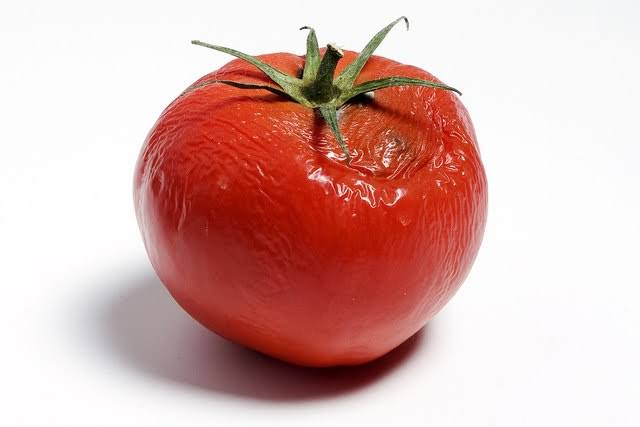

For many struggling households, a basket of bruised or partially rotten tomatoes can feel like a blessing in difficult economic times. Sold at a fraction of the cost of fresh produce, these tomatoes, popularly known in parts of Nigeria as “Ata Esha” or “Awarawa” often find their way into kitchens, roadside restaurants and street food stalls.
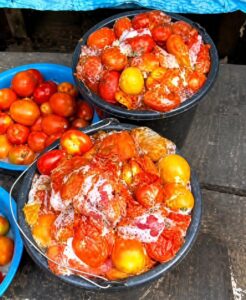
To a family trying to stretch a limited budget, they represent affordability. To health experts, however, they represent something far more troubling: a hidden public health risk.
As food prices continue to climb, more consumers are turning to damaged vegetables and fruits that would otherwise be discarded. Yet what appears to be a harmless attempt to save money may, in reality, expose families to dangerous toxins, foodborne illnesses and long-term health complications.
A tomato does not simply become unpleasant when it spoils; it can become a breeding ground for harmful microorganisms.
Health advocate and social media educator Chinonso Egemba, popularly known as Aproko Doctor, recently raised concerns about the growing consumption of fungus-infested tomatoes and other food items sold in local markets.

According to him, the white substances frequently found inside rotten tomatoes are often linked to fungal growth. Some of these fungi can produce aflatoxins, dangerous compounds that may accumulate in the body over time and pose serious health risks.
The concern extends beyond tomatoes alone. Corn, onions, groundnuts and grains stored under damp or poor conditions are also vulnerable to fungal contamination.
For many consumers, the danger is invisible. A food item may look salvageable after the visibly damaged portion is removed, but contamination can spread far beyond what the eye can see.
What Are Aflatoxins?
Scientists have long identified aflatoxins as among the most dangerous naturally occurring toxins found in food.
According to the National Cancer Institute, aflatoxins are produced by certain fungi, particularly Aspergillus flavus and Aspergillus parasiticus. These fungi thrive in warm and humid conditions and commonly contaminate crops such as maize, peanuts, cottonseed and tree nuts.
Humans may be exposed through contaminated plant foods or animal products from livestock fed contaminated feed.
What makes aflatoxins particularly alarming is their potential impact over time. Repeated exposure has been associated with liver damage and an increased risk of certain cancers, especially when contamination levels are high and consumption is prolonged.
Unlike some food hazards that produce immediate symptoms, aflatoxins can work quietly, accumulating effects over months or years.
Cooking Only Does Much
One of the most dangerous misconceptions among consumers is the belief that boiling or cooking spoiled food eliminates all risks.
While heat can destroy some bacteria, certain toxins produced by fungi and bacteria can survive cooking temperatures. This means that a pot of stew prepared with rotten tomatoes may still contain harmful substances even after prolonged cooking.
Many households assume that removing visibly damaged portions is sufficient. Experts caution that microbial contamination often spreads beyond the areas showing obvious signs of spoilage.
The result is a false sense of security that can place entire families at risk.
The dangers are not limited to long-term illnesses.
According to nutrition expert and former Director of Nutrition Services in Osun State, James Oloyede, spoiled tomatoes and peppers can trigger food poisoning caused by bacteria and other harmful microorganisms.
The symptoms can appear quickly and may include diarrhoea, vomiting, stomach cramps, fever and dehydration.
In vulnerable individuals, particularly young children, older adults and people with weakened immune systems, these conditions can become severe and potentially life-threatening if not treated promptly.
“One of the greatest dangers is the possibility of food infections,” Oloyede warned, noting that complications from severe dehydration can prove fatal in extreme cases.
The growing market for rotten produce reveals a larger issue beyond food safety.
Economic hardship is increasingly forcing households to make difficult choices between affordability and nutrition. Vendors know there is demand for cheaper alternatives, and many consumers see little choice but to buy what they can afford.
Unfortunately, poverty often shifts attention from long-term health consequences to immediate survival.
A mother feeding her family today may not have the luxury of worrying about fungal toxins that could affect health years later. Yet the cumulative effect of such compromises can place already vulnerable populations at even greater risk.
Choose Safety Over Short-Term Savings
Food waste remains a serious concern, and not every blemished fruit or vegetable is dangerous. However, there is a crucial distinction between produce that is merely overripe and produce that is rotten, mouldy or visibly contaminated.
Experts advise consumers to avoid purchasing tomatoes or other foods showing signs of fungal growth, unusual discoloration, foul odours or internal mould. Proper storage, good hygiene and careful food inspection remain among the simplest ways to reduce exposure to foodborne hazards.
In difficult economic times, a basket of cheap tomatoes may appear to offer relief. Yet when spoilage has set in, the true cost may be far greater than the money saved at the market.
Sometimes, the most expensive tomato is not the fresh one,it is the rotten one that eventually sends a family to the hospital.