
Could Kimchi Help Fight Plastic Inside the Human Body?

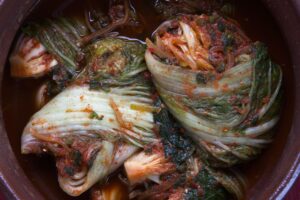
For centuries, Koreans have eaten Kimchi not merely as a side dish, but as a cultural tradition cuisine woven into everyday life. Spicy, sour and sharply aromatic, the fermented vegetable delicacy has long been celebrated for its digestive and probiotic benefits. Now, scientists believe it may hold another surprising possibility, helping the human body remove tiny plastic particles lodged in the gut.

The emerging research sounds almost futuristic. Yet behind the headlines lies a growing scientific concern that has quietly unsettled researchers worldwide: nanoplastics.
Nanoplastics are microscopic fragments formed when larger plastics degrade into ever smaller particles. Measuring less than one micrometer, they are small enough to infiltrate food, drinking water and even the air humans breathe. Scientists increasingly worry that because of their size, these particles can cross biological barriers inside the body and potentially accumulate in organs such as the kidneys, liver and brain.
In recent years, studies detecting microplastics and nanoplastics in human blood, lungs and other tissues have intensified global anxiety about long-term health consequences. Although many questions remain unanswered, scientists broadly agree that plastic pollution is no longer just an environmental crisis, it is becoming a public health concern.
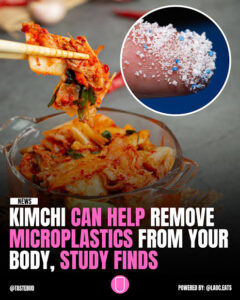
Against that backdrop, researchers in South Korea recently uncovered findings that have drawn significant attention.
A team led by Se Hee Lee and Tae Woong Whon investigated whether certain bacteria derived from kimchi could interact with nanoplastics inside the digestive system. Their study, published in the scientific journal Bioresource Technology, focused on a lactic acid bacterium known as Leuconostoc mesenteroides CBA3656.
Under standard laboratory conditions, the bacterium demonstrated an impressive ability to bind with polystyrene nanoplastics, recording an adsorption efficiency of 87 per cent. More importantly, when researchers recreated conditions resembling the human intestinal tract, the strain still maintained a 57 per cent adsorption rate.
That figure stood out because another commonly used probiotic strain experienced a dramatic collapse in performance under the same conditions, dropping from 85 per cent efficiency to just 3 per cent.
In simpler terms, the kimchi-derived bacterium appeared capable of attaching itself to nanoplastic particles even in environments similar to the human gut, potentially helping the body expel them naturally.
The findings have generated excitement because they hint at a possible biological strategy for dealing with plastic contamination, one that relies not on medication or technology, but on microorganisms derived from traditional fermented foods.
However, scientists are also urging caution against exaggerated conclusions.
The research remains in its early stages. The experiments were conducted in laboratory simulations and animal models, not in humans. There is currently no evidence proving that eating kimchi directly removes nanoplastics from the human body in the dramatic way some social media narratives suggest.
What the study does show is that certain probiotic bacteria may possess mechanisms capable of interacting with plastic particles in the digestive tract. Whether those effects translate into meaningful health benefits for humans still requires extensive clinical investigation.
That distinction matters in an era where scientific discoveries are often amplified online before the evidence fully matures. Public fascination with plastics inside the human body has already produced several sensational claims, including widely circulated assertions that humans carry “a spoonful of plastic” in their brains. Some of those studies have later faced criticism or methodological concerns, including accidental contamination during laboratory analysis.
Yet even amid scientific debate, one reality remains difficult to dismiss: humans are continuously exposed to microplastics and nanoplastics through food packaging, synthetic fabrics, polluted water and degraded waste materials. The particles are now so widespread that traces have been discovered from Arctic snow to deep ocean trenches.
Researchers believe fermented foods like kimchi may eventually become part of broader conversations about how the body responds to these contaminants.
“Plastic pollution is increasingly recognized not only as an environmental issue but also as a public health concern,” Dr. Lee noted while discussing the study’s findings.
According to the researchers, microorganisms traditionally associated with food fermentation could represent a new frontier in addressing environmental pollutants within biological systems.
The possibility is especially fascinating because it connects ancient culinary traditions with one of the most modern crises imaginable.
Long before plastic existed, fermentation was already serving as humanity’s method of preserving food and nurturing beneficial microbes. Now, centuries later, those same microbial communities may offer clues about how the body could defend itself against the unintended consequences of industrial civilization.
For now, kimchi remains best understood as a nutritious fermented food rich in probiotics, fibre and flavour — not a miracle cure for plastic exposure. But the science surrounding it is opening a provocative new chapter in the relationship between diet, microbes and environmental health.
Perhaps that is what makes the discovery so compelling: the idea that answers to some of the world’s newest problems may still be hidden inside some of humanity’s oldest foods.