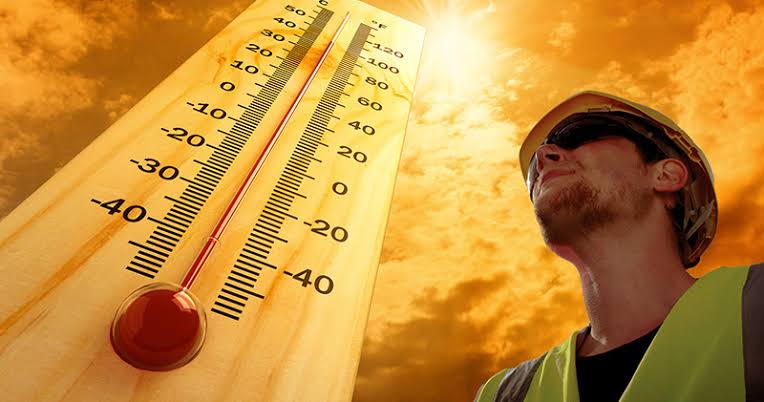

The Earth is heating faster than humanity appears prepared for, and according to the United Nations, the most alarming temperatures may not yet have arrived.
Fresh warnings from the World Meteorological Organisation (WMO) paint a troubling picture of the coming years, with global average temperatures expected to remain at or near record-breaking levels through the end of the decade. Scientists now say there is a strong likelihood that another hottest year in recorded history could emerge before 2031, extending a dangerous climate streak that has already transformed weather systems across the world.
The 11 hottest years ever recorded have all occurred since 2015, underscoring how rapidly global warming has accelerated in recent times. The WMO’s latest assessment suggests the trend is not slowing. Instead, the planet appears to be entering a prolonged period of intensified heat, driven largely by greenhouse gas emissions and amplified by natural climate cycles.
At the centre of growing concern is the increasingly symbolic 1.5 degrees Celsius threshold. Scientists estimate there is now a 75 per cent chance that the average global temperature between 2026 and 2030 will exceed 1.5°C above pre-industrial levels, the critical benchmark central to the 2015 Paris Climate Agreement. That agreement sought to limit warming to “well below” 2°C and ideally below 1.5°C compared with temperatures before large-scale industrialisation began in the mid-19th century.
While temporary breaches of the threshold do not necessarily mean the Paris goals have completely failed, they signal how dangerously close the world is moving toward long-term warming beyond safe limits.
The WMO also warned that there is a 91 per cent chance at least one year between 2026 and 2030 will temporarily surpass the 1.5°C mark. Although scientists consider it extremely unlikely that any single year will exceed 2°C in the near future, the repeated crossing of the lower threshold reflects a climate system under growing strain.
The warning arrives as parts of Europe already grapple with unusually intense early heat. Britain and France recently experienced record-breaking May temperatures under a powerful “heat dome,” a phenomenon in which high-pressure systems trap hot air over regions for extended periods. Across the continent, climate scientists have repeatedly observed that warming trends are making heatwaves more frequent, longer-lasting and significantly more severe.
Over the last three decades, Europe has warmed at roughly twice the global average rate. According to the Copernicus Climate Change Service, temperatures across the continent have risen by approximately 0.56°C per decade, enough to dramatically intensify heat extremes and environmental stress.
Yet Europe is only one part of a much larger global story. The WMO report highlights the possible return of El Niño conditions toward the end of 2026, a development that could further intensify global temperatures in 2027. El Niño, a naturally occurring climate phenomenon involving the warming of ocean surface temperatures in the Pacific, influences weather patterns worldwide. It can alter rainfall, disrupt agricultural cycles, trigger droughts in some regions and flooding in others, while also contributing to higher global temperatures.
The last strong El Niño event played a major role in pushing 2023 and 2024 into the record books as some of the hottest years ever observed. Scientists fear a repeat could once again accelerate already dangerous warming trends.
The implications stretch far beyond uncomfortable weather. Climate change increasingly shapes food systems, migration patterns, water availability and public health. Regions already vulnerable to instability are expected to face even greater challenges as temperatures rise. The WMO projects wetter-than-average conditions in areas such as the Sahel, northern Europe, Alaska and Siberia between 2026 and 2030, while drier conditions are forecast for parts of the Amazon, a development carrying serious ecological consequences for one of the world’s most important carbon sinks.
Particularly alarming are forecasts concerning the Arctic.
Temperatures in Arctic regions during the next five northern hemisphere winters are predicted to average 2.8°C above the 1991–2020 baseline, more than three times the projected global average increase during the same period. Scientists have long warned that rapid Arctic warming could accelerate ice melt, raise sea levels and destabilise global climate systems further.
What makes the situation especially concerning is that climate warnings are no longer theoretical projections of a distant future. They are increasingly descriptions of a present reality.
Floods, prolonged droughts, wildfires and deadly heatwaves are becoming more frequent across continents. In Africa, climate shocks continue to worsen food insecurity and displacement. In Asia and Latin America, rising temperatures threaten agriculture and water systems. Coastal cities worldwide face mounting risks from sea-level rise and extreme weather.
The latest WMO outlook is therefore not merely another scientific update. It is a reminder that climate change is no longer unfolding gradually in the background of human activity; it is becoming one of the defining forces shaping economies, politics, migration and daily survival in the 21st century.