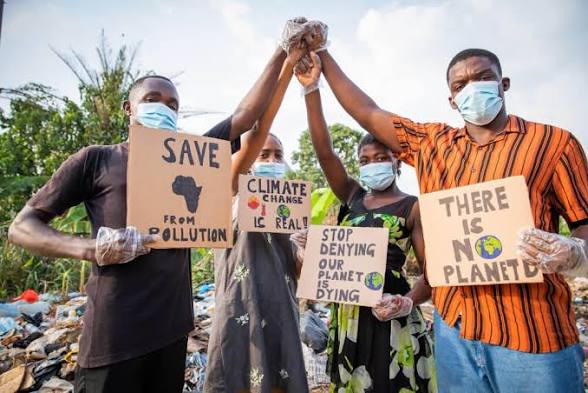

Climate change is no longer being viewed solely as an environmental challenge. Health experts and policymakers are increasingly warning that its effects are spilling into nearly every aspect of human life, with consequences extending far beyond rising temperatures and extreme weather events.
Fortunately, a new call to action by the World Health Organization-backed Pan-European Commission on Climate and Health has described climate change as an immediate and escalating crisis affecting health systems, food security, water supply, energy stability and national security.
The commission, chaired by former Katrín Jakobsdóttir and convened by Hans Henri P. Kluge, brought together former heads of government, ministers and civil society leaders from across WHO’s 53-country European region.
Its message to governments was direct: climate change is no longer a future threat but a present emergency demanding urgent action.
Experts warn that rapid increases in global temperatures are making it more likely for the world to reach dangerous climate “tipping points”, critical thresholds where major Earth systems undergo dramatic and potentially irreversible changes.
According to the commission, the window to prevent permanent damage is narrowing rapidly.
“The climate crisis is a threat to our safety and security, social cohesion, human rights and health,” Jakobsdóttir said.
“Far from being a problem solely for future generations, it is a real and present threat to us right now. Climate action is not merely a necessity; it is a high-return investment for a more just and resilient society.”
The commission released 17 recommendations focused on four key areas: strengthening health security, transforming health systems, scaling up community action and restructuring economic systems that contribute to climate change.
One of its strongest recommendations calls on governments to place climate and health issues on the agenda of national security councils, arguing that climate change should be treated as a major security threat alongside traditional geopolitical concerns.
The report noted that climate-related disruptions are already affecting infrastructure, health systems and food and water security across many countries.
Health implications featured prominently throughout the report.
Air pollution linked to fossil fuel use continues to kill hundreds of thousands of people annually across the region, according to the commission, while the same energy systems driving climate change also expose countries to volatile fuel markets and price shocks.
The commission argued that accelerating the shift to renewable energy and cleaner technologies would not only reduce emissions but also strengthen energy security and improve public health outcomes.
“Climate change is a security threat, a health emergency and an economic time bomb all rolled into one,” Kluge said.
The commission also urged WHO to formally designate climate change as a Public Health Emergency of International Concern, arguing that existing international health regulations were designed largely around temporary disease outbreaks and not long-term crises of this scale.
Health systems themselves were identified as part of the solution.
The report called for mandatory climate-health education for medical professionals, stronger emphasis on mental health within climate planning and the integration of climate indicators into national health performance assessments.
It also urged healthcare systems to adopt environmentally sustainable procurement practices, noting that much of the sector’s emissions come through supply chains.
The commission further challenged governments to reconsider how economic success is measured.
It argued that traditional indicators such as Gross Domestic Product often count fossil fuel consumption as economic activity while overlooking the health costs of pollution, climate disasters and environmental degradation.
Andrew Haines said climate action also presents opportunities.
“Climate change is already impacting health across the region through multiple pathways, but climate adaptation and mitigation actions provide opportunities to protect and promote health,” he said.
As climate pressures intensify globally, experts increasingly warn that delays in action could carry consequences far exceeding the cost of intervention, transforming what was once seen as an environmental issue into one of the defining public health challenges of the century.