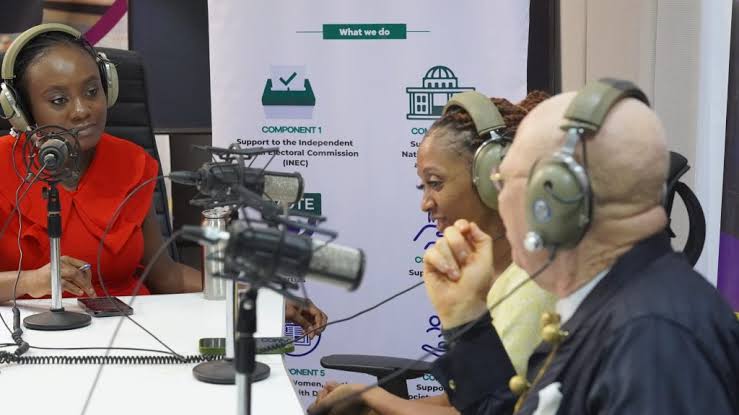
Media Must Be Guardians of Truth Ahead of 2027 Elections, INEC Chairman Warns

As the 2027 General Elections gathers speed, takes shape and prepares to berth, there is an advisory making the rounds.
The Chairman of the Independent National Electoral Commission, Joash Amupitan, has warned Nigerian broadcast organisations to uphold truth and professionalism in all things leading up to it.
Speaking on April 8, 2026, at the 81st General Assembly of the Broadcasting Organisations of Nigeria, Amupitan cautioned that the spread of misinformation poses a serious threat to the credibility of electoral processes. He noted that in today’s digital age, elections are no longer determined solely at polling units but are increasingly shaped by narratives circulating across traditional and online media platforms.
According to him, the success of the 2027 elections will depend not only on logistics and technology but also on how responsibly the media manages information. He explained that the Electoral Act 2026 places clear obligations on media organisations to ensure fairness, accuracy, and balance in political coverage.
Amupitan also stressed that publicly owned broadcast outlets must not be used to favour any political party or candidate, adding that all contestants must be given equal access to airtime, particularly during prime programming hours. With 22 registered political parties expected to participate, he warned that fairness is not optional and that violations could attract sanctions, including fines.
He also highlighted legal provisions prohibiting inflammatory or abusive political content capable of inciting ethnic or religious tensions, urging broadcasters to distinguish clearly between legitimate debate and dangerous rhetoric. In addition, he reminded media houses of the mandatory 24-hour silence period before election day, during which all political campaigns and advertisements must cease to allow voters reflect.
While acknowledging the constitutional right to freedom of expression, the INEC chairman noted that the use of public airwaves comes with heightened responsibility, especially during sensitive electoral periods.
Amupitan further explained that INEC works in collaboration with the National Broadcasting Commission, which oversees broadcasting standards, while the commission focuses on electoral guidelines and compliance. However, he pointed to persistent challenges, including weak enforcement, regulatory overlaps, and the influence of incumbency on state-owned media platforms.
He particularly raised concerns about the commercialisation of political airtime, warning that it could marginalise smaller parties and undermine the principle of equal opportunity. The growing influence of digital platforms, he added, has further complicated regulation, as broadcast content is rapidly shared and amplified online beyond traditional controls.
To address these issues, Amupitan called for stronger collaboration between regulators, improved editorial standards within media organisations, and more robust fact-checking mechanisms. He also urged transparency in political advertising, including clear disclosure of sponsors and pricing structures.
Reaffirming INEC’s commitment to credible elections, he encouraged broadcasters to rely on the commission’s official platforms for verified information and to play an active role in promoting voter education and participation.
“The integrity of our elections,” he said, “will depend not just on the voting process, but on the quality of information available to the public.”