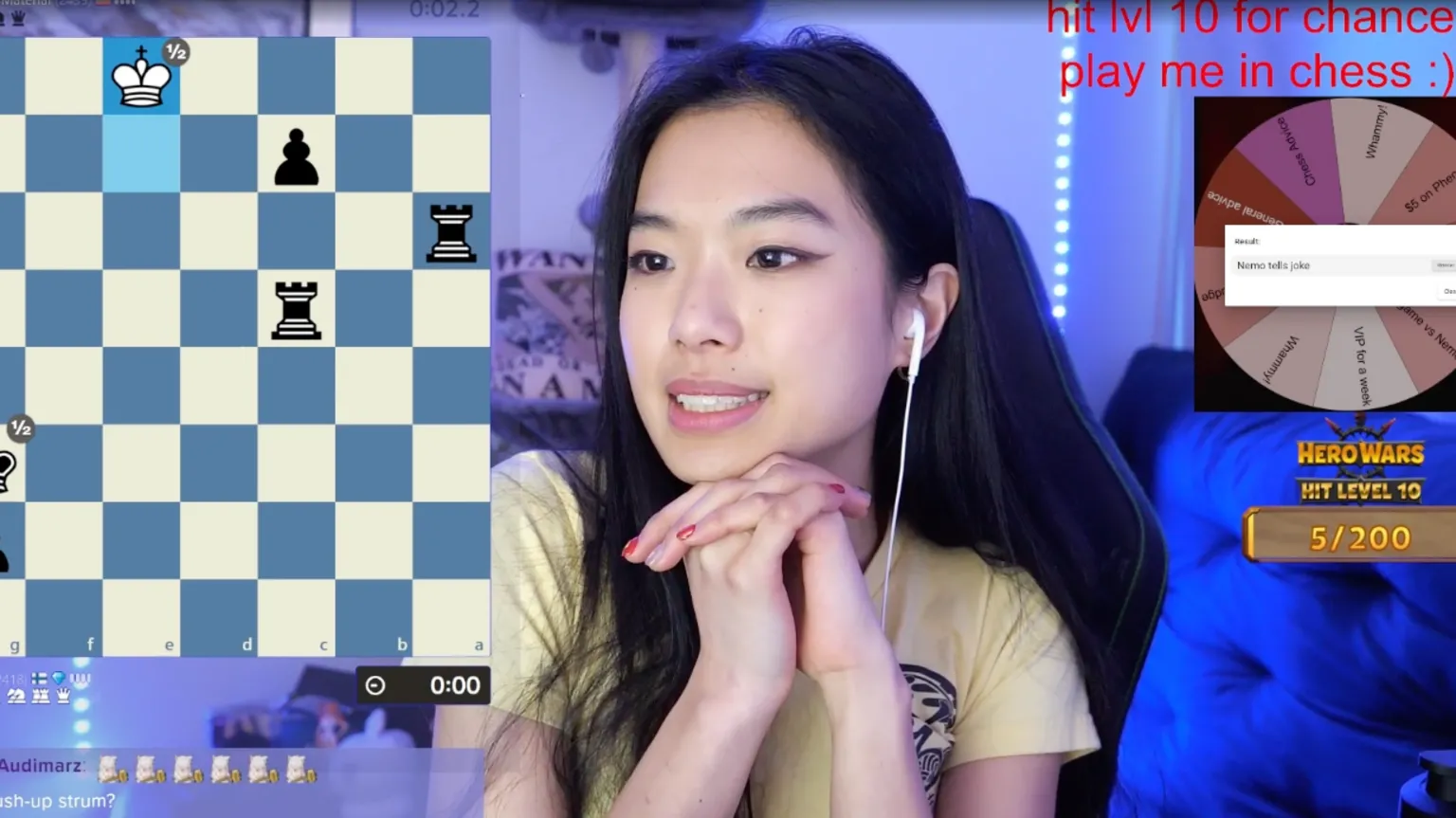

It’s a pandemic story that has become a global phenomenon.
What began as a pastime during the COVID-19 pandemic has grown into a global phenomenon for many chess content creators, with Canadian Woman Grandmaster Nemo Zhou emerging as one of the most recognisable faces bringing the centuries-old game to millions of online viewers.

Zhou, who holds the title of Woman Grandmaster, one of the highest female-only titles in competitive chess awarded by FIDE, was studying economics and mathematics at the University of Toronto when she began gaining attention for streaming chess content online.
According to The BBC, her engaging style, combining competitive play with commentary and interaction, quickly attracted a massive digital following. Today, she is widely seen as part of a new generation of chess personalities transforming how audiences experience the game.
For decades, elite chess tournaments were traditionally played in near silence inside formal halls, often lasting hours with little effort to engage casual viewers. But the rise of online platforms and streaming culture has helped modernise the sport.
Many tournaments now feature faster formats such as rapid and blitz games, where players may have only three minutes per match. Broadcasters have also begun using tools like heart-rate monitors to reveal the intense pressure players face during critical moments.
Five years on, Zhou, now 26, has more than two million followers across Twitch, Instagram, YouTube and TikTok.
She streams for five to six hours a day, at least five days a week, drawing her biggest audiences at weekends.
Her videos feature a mix of her playing online and in person, including against New York’s famed Washington Square Park hustlers.
Zhou also has commercial sponsorships, works with other collaborators, and frequently travels the world.
On YouTube, she makes money through views, advertising and brand deals – and on Instagram her income comes from sponsored posts.
This shift toward faster, more viewer-friendly formats has helped introduce chess to younger audiences and social media users around the world.
Zhou is among several content creators credited with helping bring the ancient game firmly into the digital age, particularly on streaming platforms such as Twitch and TikTok.
Another rising figure following a similar path is Sarah El Barbry, a 24-year-old chess content creator with Egyptian and Moroccan heritage who grew up in Paris. She began posting chess-related videos on TikTok in 2023 before transitioning into full-time streaming the following year.
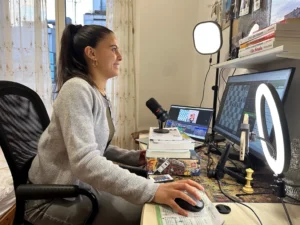
El Barbry who makes over $1,200 from.Youtibe, aid she noticed a lack of women producing chess content in French and decided to fill that gap. Her streams combine online gameplay, educational tutorials and creative challenges, including blindfold chess where players visualise the board entirely in their minds.
The growing visibility of women in the streaming chess community reflects a broader trend in the game’s digital transformation.
Data from TwitchMetrics shows that as of January 2026, female-led channels accounted for about half of the top 20 most-watched chess streams on Twitch, excluding large corporate channels.
For creators like Zhou and El Barbry, the combination of technology, personality and community engagement is reshaping the image of a game once viewed as slow, solitary and reserved for elite circles.
Instead, chess is increasingly becoming a vibrant online spectacle, one where women are not only participating but leading the conversation and inspiring a new generation of players worldwide.