Austria’s Glaciers Rapidly Disappearing as Scientists Warn of Climate Crisis in the Alps

Rising global temperatures are accelerating the disappearance of glaciers across Austria, raising fresh concerns about the future of water supplies, energy generation and mountain infrastructure in the Alpine nation.
A new report released on March 13 by the Austrian Alpine Club reveals that all but two of Austria’s 96 monitored glaciers have retreated over the past two years, a development scientists describe as dramatic evidence of the growing impact of climate change.
Researchers say the glaciers are not merely shrinking but are gradually disintegrating, signalling deeper structural changes to the mountain landscape. According to the report, glaciers across the Austrian Alps are rapidly losing length, area and volume.
Andreas Kellerer-Pirklbauer of the University of Graz explained that many glaciers are now entering a phase of structural collapse.
“Many glaciers are not only shrinking in length but are increasingly entering a phase of structural disintegration,” he said, noting that exposed rock ledges, broken ice sections and collapsing glacier tongues are becoming increasingly common.
Among the worst affected glaciers is the Alpeiner Ferner glacier in the Tyrol region, which lost 114.3 metres in length during the monitoring period. The Stubacher Sonnblickkees glacier in Salzburg also recorded significant retreat, shrinking by 103.9 metres.
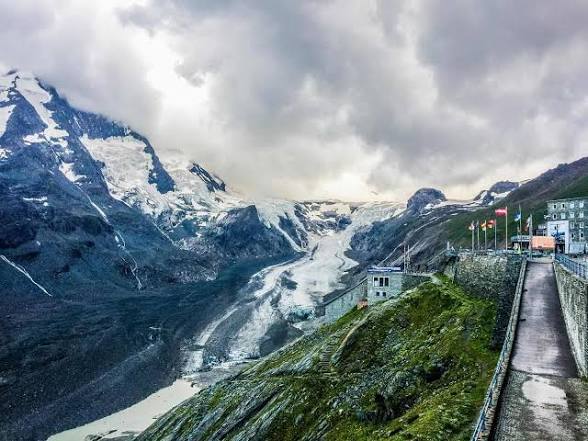
Austria’s largest glacier, the Pasterze glacier in Carinthia, continues to shrink as well. Scientists warn that its glacier tongue could soon break off, potentially splitting the glacier into two separate sections.
The study attributes the accelerated ice loss largely to climate conditions in recent seasons. Researchers reported a warm winter with limited snowfall followed by an unusually hot early summer, with temperatures in June nearly five degrees Celsius above the long-term average.
Experts say the Alpine region is particularly vulnerable to the effects of climate change, where rising temperatures are already altering ecosystems and weather patterns.
According to the report, the disappearance of glaciers could have wide-ranging consequences, including increased natural hazards such as rockfalls and landslides as newly exposed terrain becomes unstable.
Scientists also warn that vital Alpine infrastructure, from transport routes to energy facilities, could face increasing risks as the landscape undergoes profound changes.
Nicole Slupetzky, Vice-President of the Austrian Alpine Club, said the transformation of the Alps is already underway.
“Climate change has long been a reality in the Alps, and we are experiencing its consequences right now,” she said, adding that the challenge ahead lies not in restoring glaciers to their former state but in preparing for the impacts of their disappearance.
Another researcher at the University of Graz, Gerhard Lieb, noted that some glacier areas are already revealing what the future landscape might look like, vast grey-white stretches where ice once dominated the terrain.
For scientists monitoring the Alps, the retreat of Austria’s glaciers is not just an environmental concern but a stark warning of the rapid pace at which climate change is reshaping some of Europe’s most iconic natural landscapes.