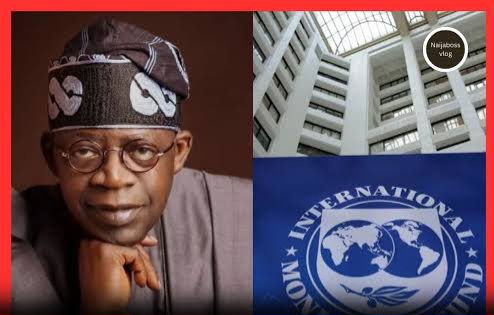

A Nigerian lawmaker, Jimoh Ibrahim, has said Nigeria’s exclusion from the list of the world’s most indebted countries is proof of what he described as disciplined fiscal coordination under President Bola Tinubu.
The Ondo South Senator who is also an ambassador-designate, made the assertion in a statement shared on Wednesday, amid renewed debate over Nigeria’s rising debt profile and borrowing strategy.

His comments follow the release of fresh global debt figures for the fourth quarter of 2025 by the Institute of International Finance in its Global Debt Monitor report, with analysis by Visual Capitalist. The data show that several advanced economies now carry total debt burdens exceeding 300 per cent of their gross domestic product (GDP).
According to the report, Hong Kong tops the global ranking with a debt-to-GDP ratio of 380 per cent. It is followed by Japan at 372 per cent, Singapore at 347 per cent, France at 326 per cent, and Canada at 315 per cent. These figures combine government, corporate and household debt.
In Africa, countries such as Senegal (156 per cent), South Africa (149 per cent), and Tunisia (143 per cent) are grappling with elevated debt levels, largely driven by sovereign borrowing. Nigeria, however, does not appear among the most indebted nations globally in terms of total debt-to-GDP ratio.
Reacting to the data, Ibrahim said critics who had predicted unsustainable borrowing under the Tinubu administration had been mistaken.
“Those who expected reckless borrowing have been proven wrong. Nigeria is not on the list of the world’s most indebted countries. This reflects deliberate fiscal coordination and structured economic reforms,” he said.
The senator argued that Nigeria’s fiscal trajectory shows the government has not embarked on excessive borrowing, contrary to earlier projections. He maintained that reform-driven policies including fuel subsidy removal and exchange rate unification were introduced to stabilise public finances and reduce long-term vulnerabilities.
Nigeria’s debt sustainability remains a recurring topic in policy circles, particularly amid global economic headwinds, tighter monetary conditions and exchange rate volatility affecting emerging markets.
While the country faces its own fiscal pressures, Ibrahim insists that comparative global data suggest a more measured borrowing approach than critics have portrayed.



Show CommentsThank you for putting this in a way that anyone can understand.
Thank you for putting this in a way that anyone can understand.
What a great resource. I’ll be referring back to this often.
Thanks for sharing your knowledge. This added a lot of value to my day.
This was very well laid out and easy to follow.