

The revelation that Aliko Dangote recruited 11,000 Indian technicians to run his refinery because Nigeria couldn’t find 100 qualified locally isn’t a scandal but one that shows uncomfortable truths about Africa’s educational failures.
In a country of 235 million people ( unverified ) Africa’s largest economy cannot produce enough skilled technicians to operate its own industries. This isn’t just Nigeria’s problem; it’s a continental crisis hiding in plain sight.
Africa wasn’t defeated by colonial tanks or neo-colonial conspiracies. It was defeated by polytechnics. While African nations organized endless summits and national assemblies, India built classrooms. While Africa politicized technical education, India professionalized it. While African universities churned out theoretical graduates with limited practical skills, India trained thousands of operational technicians who could actually run machinery, repair equipment, and manage industrial processes. The Indians didn’t take jobs in Lagos by force, they entered with their skills, screwdrivers, and expertise.
Without Skills, Even Billionaires Become Dependent
Dangote’s preference for Indian workers isn’t about ethnic favoritism, it’s about competence. He prefers those who know how to run a refinery. This exposes a painful reality: wealth alone cannot compensate for weak human capital. Africa provides land, raw materials, tax breaks, and sometimes public funds. Others provide the brains. And at the end of every project, those who brought the expertise leave with the largest share of added value. We remain tenants in our own development, renting expertise we should have cultivated decades ago.
Across the continent, technical high schools operate on 1980s machinery, unretrained teachers, frozen curricula, and workshops that have become dusty museums. Students in technical tracks are often viewed as “less brilliant” than their peers in general education. African parents dream of their children becoming lawyers, doctors, and members of parliament, rarely industrial mechanics, electrotechnical engineers, or petrochemical technicians. Yet the modern world runs entirely on these skills. Until this mindset shifts, Africa will remain dependent on foreign technical labor.
Delta State boasts six fully established, rehabilitated, and accredited technical colleges in Agbor, Sapele, Ofagbe, Utagba-Ogbe, Ogor, and Issele-Uku, with nine more under construction across Asaba, Obiaruku, and Orerokpe. On paper, this investment appears commendable. But the reality behind the infrastructure tells a different story. Recent visits to these institutions reveal outdated syllabi from the 1970s, bearing no resemblance to modern technological engineering standards found in countries like India. Technical instructors themselves lack the very expertise they’re expected to teach, a cycle of inadequacy that perpetuates dependency.
What Model Is Worth Copying?
India’s technical education transformation didn’t happen by accident. It resulted from deliberate policy choices: massive investment in polytechnics, continuous curriculum updates aligned with industry needs, dignity of labor campaigns that elevated technical professions, and partnerships between educational institutions and private industry. India understood that development requires not just engineers with degrees, but armies of qualified welders, certified electronics technicians, industrial mechanics, and IT professionals who can code, repair, program, and assemble.
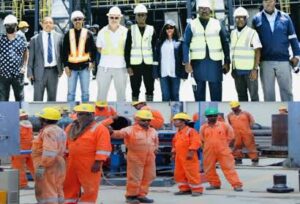
Delta State urgently needs to transform some of its technical colleges into special technical institutions with today’s curriculum standards. This means replacing 1970s syllabi with programs aligned with current industrial needs: petrochemical processing, advanced welding techniques, industrial automation, modern electronics repair, and software development. These schools must become talent factories producing 50,000 to 100,000 qualified technicians annually—not just 200 graduates per year.
No educational reform can succeed without addressing the instructor crisis. Delta State must invest in training technical teachers who possess actual industrial experience and current technical knowledge. This requires partnerships with successful technical education systems abroad, exchange programs with Indian technical institutes, and competitive salaries that attract industry professionals into teaching. Teachers stuck in 1970s knowledge cannot produce 21st-century technicians.