

Is there anything such as a perfect match?
The idea arrives early and lodges deep: somewhere in this crowded, chaotic world, a single person exists who is meant for you. Your perfect match. Your other half. The one whose absence leaves you incomplete and whose presence will render every hardship bearable, every loneliness forgotten, every question about the future suddenly answered. This is not merely a hope but a conviction, cultivated by centuries of storytelling and reinforced by every rom-com, every wedding vow, every grandmother who insists that when you know, you just know.
There is only one problem. According to an article, the science suggests it is not true.
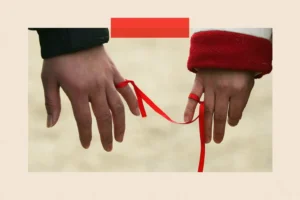
Not entirely, anyway. Not in the way we have been taught to believe. The latest research into human attachment, relationship satisfaction, and the nature of lasting love paints a picture far more complicated and ultimately far more hopeful, than the fairy tale promises. Because if there is no single soulmate preordained for each of us, if destiny does not guarantee a happy ending, then the work of building love becomes something we can actually do, rather than something we must passively wait to receive.
Viren Swami, Professor of Social Psychology at Anglia Ruskin University in Cambridge, has spent years tracing the origins of our contemporary understanding of romantic love. His research locates its European roots not in ancient philosophy or religious doctrine but in the medieval courts of Camelot. The stories of Lancelot and Guinevere, of knights and their ladies, of chivalric devotion unto death, these narratives, sweeping across the continent, introduced a revolutionary idea.
“These stories first pushed the idea that you should choose one other individual as your companion and that companion is for life,” Swami explains.
Before this cultural shift, love was understood differently. “In much of Europe, you could love as many people as you like, and love was fluid, and it was often not about sex.”
The transformation was gradual but profound. As industrialisation uprooted populations from agricultural communities, tearing apart the familiar attachments of village and kinship, individuals found themselves increasingly alone in crowded cities. Alienation became the modern condition. And into that void stepped the idea of the one.
“They start looking for one other individual to save them,” Swami says. “To save them from the wretchedness of their lives.”
This is the soulmate myth in its most potent form: not merely companionship but salvation. Not someone to share the journey but someone to rescue you from it. It is a burden no human being can bear, yet millions continue to seek precisely that.
Also, Jason Carroll, Professor of Marriage and Family Studies at Brigham Young University in Utah, understands why the longing persists. “We are attachment-based creatures,” he says. “We desire that bond.” The hunger for deep, enduring connection is not the problem; it is woven into our neurological architecture, our evolutionary inheritance, our fundamental nature as social beings.
The problem, Carroll tells his students, is confusing the desire for bond with the myth of predestination. He encourages them to leave the idea of a soulmate without giving up their desire for the one.
It is a subtle distinction but a critical one. The soulmate model says: this person was made for me, our union was written in the stars, and if we struggle, it must mean I chose wrong. The growth model says: this person and I are building something together, and building requires effort, repair, and the willingness to keep showing up even when showing up is hard.
The data supports the builders.
In a widely cited series of studies conducted in the late 1990s and early 2000s, Professor C. Raymond Knee and his team at the University of Houston tracked how different beliefs about relationships predicted actual outcomes. They found that people who believed relationships were “meant to be” were far more likely to doubt their commitment after conflict. A single argument could shake the foundation because the foundation was supposed to be unshakeable. Those with more growth-minded views, by contrast, tended to stay more committed even on days when they argued. Conflict did not signal failure; it signalled work to be done.
“They ask what they can do to make their relationship better, have improvement and have growth,” Carroll says of growth-oriented couples. They still want something special—they are not settling for less than deep connection—but they expect rough patches. They plan for them. They build relationships resilient enough to survive them.
What does a growth-oriented relationship actually look like in daily life? The answer, it turns out, is remarkably ordinary.
The anthropologist Jacqui Gabb, who has conducted extensive research into long-term partnerships, collected diaries from couples asked to document their ordinary moments. One entry, written by a woman named Sumaira, describes her partner coming home from work. She has cooked dinner. They embrace in the hallway. They sit together at the table and eat.
“It’s perfect,” Sumaira writes. “Just us and food. What more could I want?”
Later there is a spontaneous dance in the living room. A walk through long grass where she becomes frightened of the dark. A photograph her partner loves so much he makes it the background on his phone.
It reads like a lovely, everyday tale, not a fairy tale. There are no glass slippers. There are wellies.
Yet Gabb points out that woven through the sweetness are the ordinary pressures that every real relationship must navigate: money worries, family obligations, a history of depression the couple are learning to manage together. The soulmate feeling here does not float above life, untouched by its difficulties. It is made, inch by inch, by life, in the way the pair meets those pressures. The magic is not in the absence of problems but in the presence of partnership.
This is the truth the fairy tale obscures. A perfect mate does not exist, not because people are flawed, though they are—but because perfection is the wrong category altogether. Relationships are not judged by whether they match an idealised image. They are judged by whether they work, whether they sustain, whether the people inside them feel seen and known and valued.
The research on relationship satisfaction consistently points to the same conclusion: what matters most is not money or romance or any of the external markers we are trained to pursue. It is what Gabb calls “intimate couple knowledge” the deep familiarity with another person’s inner world and its expression in the small gestures of daily life. The hug in the hallway. The meal shared. The dance in the living room. The photo saved to a phone.
These are not grand gestures. They are not the stuff of epic romance. They are the building blocks of actual, durable love, accumulated day after day until they form something solid enough to withstand the inevitable storms.
-The longing for the one will not disappear, nor should it. We are attachment-based creatures, as Carroll says, and the desire for profound connection is not a pathology to be cured but a hunger to be fed. The question is what we feed it.
If we feed it fantasy, we will remain perpetually hungry, because no real person can match an imagined ideal. If we feed it presence, the ordinary, unglamorous, deeply satisfying work of knowing and being known, we may find that the one was never out there waiting to be discovered. The one was here all along, in the person we chose and continue to choose, in the life we build together inch by inch, in the imperfect, enduring love that asks not for perfection but for persistence.
Dating can be challenging. Relationships and marriages are even harder. They require constant work, and the choice to love must be made daily, sometimes hourly. Partnerships fall apart, and sometimes they fall apart for good reasons: betrayal, incompatibility, the slow erosion of trust. But they also fall apart, the research suggests, when people mistake difficulty for destiny, when they interpret a rough patch as proof they chose wrong, when they abandon the work of growth in pursuit of a fantasy that never existed.
What more could anyone want?