Lagos Launches “Gold Rush” for Used Cooking Oil, Aims to Fuel $20M Biofuel Revolution

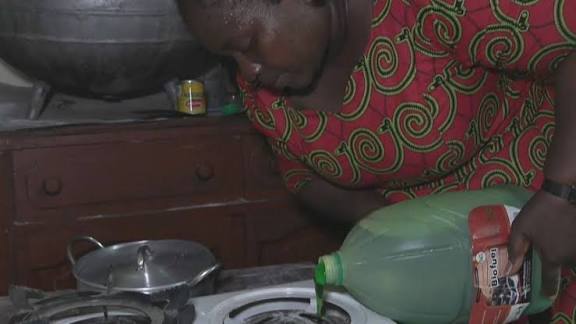
The ultimate target is cleaner skies. The prize isn’t oil from the Niger Delta, but the used, discarded vegetable oil from last night’s batch of puff-puff and akara.
The Lagos State Government has unveiled an ambitious plan to transform this slippery waste into liquid gold, a renewable biofuel market projected to be worth at least $20 million.

In what appears to blend environmental grit with economic savvy, officials have begun rolling out specialized household collection kiosks across the state. The initiative, spearheaded by the Lagos State Environmental Protection Agency (LASEPA) in partnership with Ororo Waste Management and backed by the Shell Foundation, aims to tackle a triple threat: clogged drains, public health hazards, and carbon emissions.
“This is about unlocking a massive market and putting Lagos on the global biofuel supply chain map,” declared Dr. Babatunde Ajayi, General Manager of LASEPA.
“Globally, aviation fuel and other energy sources must comply with climate change parameters. Used cooking oil is a critical feedstock, and Lagos ranks very high in terms of potential.”
The numbers are staggering. Nigeria, with its vast population and deep-frying culinary culture, is one of the world’s largest producers of used cooking oil (UCO). Lagos alone is estimated to contribute up to 50% of the national volume, a slippery, often-ignored resource that has long been a menace.
Medically, reheating oil alters its chemical composition, creating harmful compounds. Environmentally, it’s a disaster: when poured down drains, a common practice, it congeals with plastics and foam to form concrete-like blockages, exacerbating the city’s perennial flooding and road damage.
Now, that problem is being reframed as a powerhouse solution. Collected UCO will be processed into biodiesel, a cleaner-burning fuel that can slash greenhouse gas emissions by up to 90% compared to fossil fuels. This isn’t just about cleaner drains; it’s about positioning Lagos as a supplier in the burgeoning global market for sustainable aviation fuel (SAF) and renewable energy.
The model involves direct collection from restaurants, food chains, and now, households via the new kiosks. A private partner, Quatra, has been signed to handle aggregation and processing, creating a formalized green economy around what was once mere waste.
“We are turning an environmental liability into an economic and ecological asset,” said a senior ministry official at the launch event, attended by a mix of government figures, private investors, and youth representatives. “Every liter of oil collected is a liter not poisoning our waterways, and a step toward energy independence.”
The initiative signals a broader shift in how African megacities approach waste and energy. Rather than seeing only challenges in their vast informal economies and consumption patterns, Lagos is attempting to engineer a circular system where yesterday’s cooking fuel becomes tomorrow’s clean energy, proving that in the fight for a sustainable future, the answer might just be sizzling in a pan.