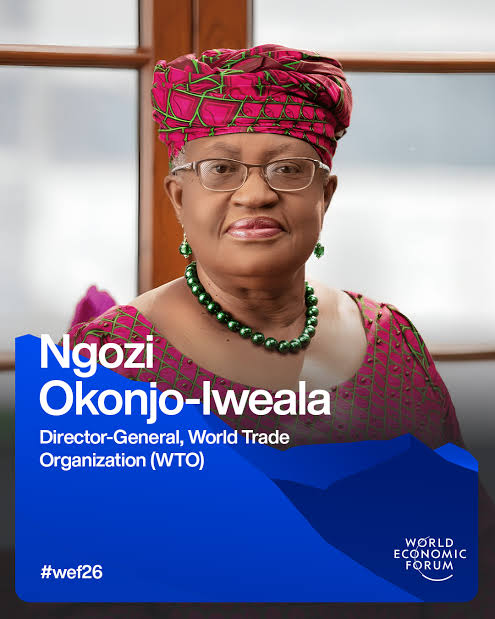

A formidable economy can’t be built on mere words or just white paper says World Trade Organization Boss, Ngozi Okonjo-Iweala.
The global trading system is undergoing a profound reconfiguration. Geopolitical tensions, pandemic-era disruptions, and strategic “de-risking” have fractured long-established supply chains, sending corporations and capital in search of new footholds. For nations positioned to act, this moment presents not just an opportunity, but an imperative.
At the recent World Economic Forum in Davos, Dr. Ngozi Okonjo-Iweala, Director-General of the World Trade Organization, issued a clear directive to her home country, Nigeria: the time for passive hope is over.
The conversation must now shift from macroeconomic stabilization to aggressive, targeted job creation, and the vehicle for this is the deliberate capture of relocating global industries.
“We need to move from stabilization to job creation, because that is where we are lacking,” Okonjo-Iweala stated, framing the nation’s most pressing challenge.
While acknowledging the government’s difficult reforms, she argued that their ultimate test lies in translating fiscal adjustments into widespread employment. The tool for this translation, she contends, is foreign direct investment anchored in manufacturing.
The blueprint she outlined is specific and grounded in Nigeria’s inherent advantages. Beyond the well-trodden path of commodities, she highlighted sectors where global demand meets local potential:
Renewable Energy: “We have the renewable capacity,” she noted, pointing to the incongruity of importing solar panels while possessing both the raw materials and the immense sunlight required to produce them. Establishing a domestic solar manufacturing ecosystem would address energy poverty while creating exportable goods.
Textiles & Apparel: Using a personal anecdote, she highlighted a daily leakage of national wealth. “Every time I buy a piece of wax, I check to see where it’s made.” Reviving Nigeria’s once-vibrant textile industry would reclaim a cultural staple, reduce import bills, and employ thousands.
Pharmaceuticals: Citing another critical sector, she identified pharmaceuticals as a prime candidate for import substitution, where strategic investment could bolster health security and economic resilience simultaneously.
However, Okonjo-Iweala presented a stark warning: opportunity does not equal destiny. The current wave of diversification, often termed “China+1,” is largely flowing to other Asian economies like Vietnam and India. Nigeria is not merely competing with regional peers, but with established global destinations that are actively courting the same investors.
To succeed, she called for a revolution in economic diplomacy. Nigeria must adopt the mindset of a top-tier consultancy and the hustle of a startup. This means crafting irresistible, sector-specific packages for investors, engaging in relentless direct outreach to boardrooms from Shanghai to Silicon Valley, and systematically addressing the perennial concerns, from infrastructure gaps to policy predictability that deter committed capital.
The global market is in a rare state of flux. For Nigeria, the question is whether it will be a spectator to this realignment or an architect of its own industrial future. The window is open, but as the WTO chief implied, it will not stay open forever.
The race to build a diversified, job-creating economy is on, and Nigeria’s next moves will define its position for a generation.