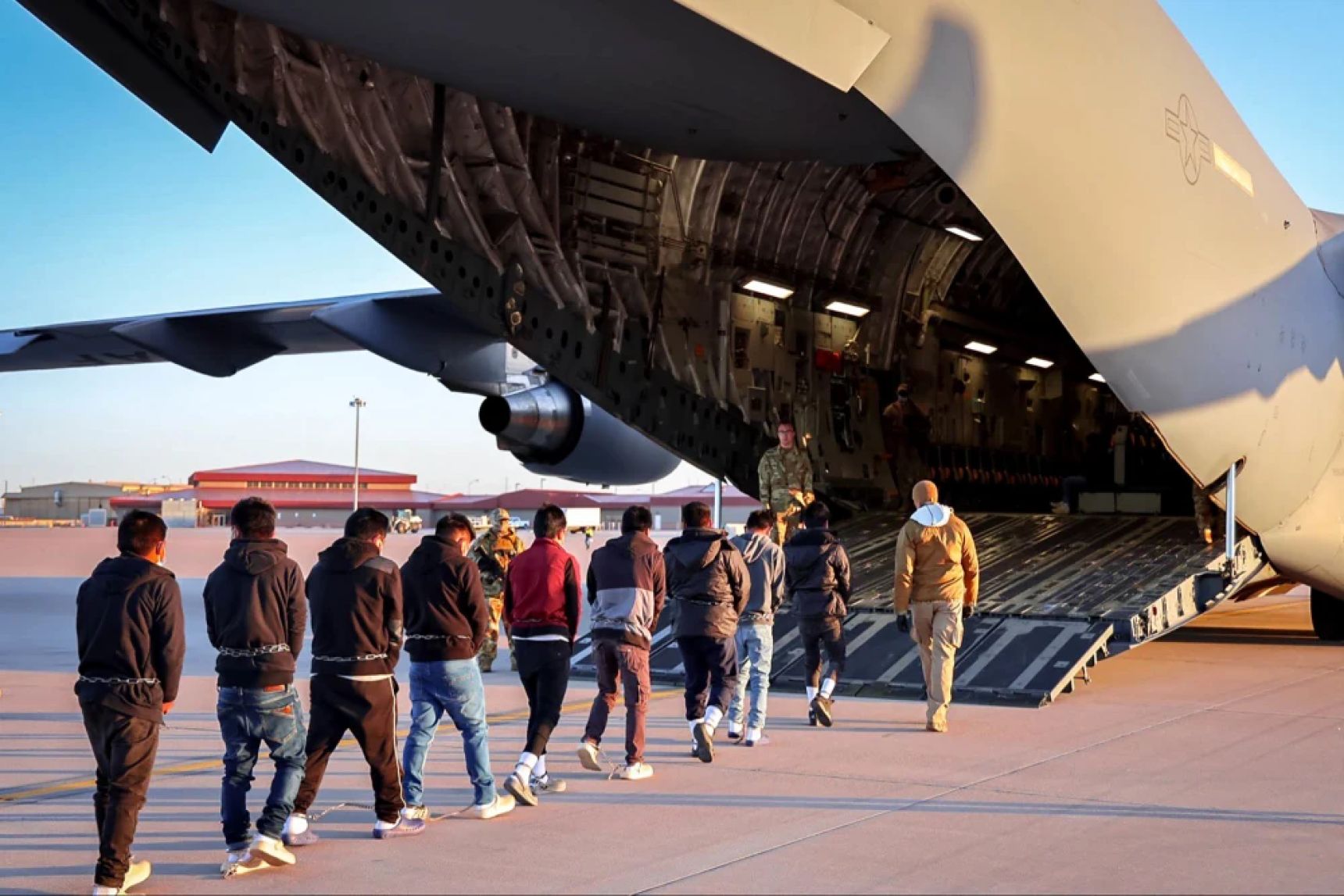

The grand theatre of global migration policy is undergoing a dramatic, and for many, a distressing, third act.
The refrain is simple, potent, and electorally resonant: “Take back control.” “Secure our borders.” “Send them back.” This is the age of deportation, a hardening of the arteries of the world, where nations seek to assert sovereignty through the stern logic of removal. Yet, as the gaze of Western capitals turns outward, fixated on planes and processing centres, a profound and consequential blindness persists.
Few are tallying the true invoice, the multifaceted and debilitating Price of Deportation for Africa, a continent compelled to become the reluctant receptacle for a crisis it did not create.
The immediate spectacle is one of raw human terminus: the charter flight touching down in the pre-dawn gloom of Lagos or Accra; the disembarkation of the “returnee,” a sterile administrative term that masks a universe of shattered ambition. These are not triumphant homecomings even in faraway Eswatini.
They are often returns to a profound and unsettling. The individual, perhaps having spent formative years abroad, is severed from the life they knew. But to view this only as a personal tragedy, a series of isolated sorrows, is to grossly underestimate the calculus. The cost is continental, systemic, and threatens to cripple the very foundations of Africa’s precarious ascent.
For decades, the lament of the “brain drain” has echoed through African finance ministries and university halls, the steady haemorrhage of doctors, engineers, and academics to more prosperous shores. The deportation drive perversely inverts this exodus, not by returning a wave of seasoned professionals, but by enacting a “brain drain in reverse.” It repatriates trauma, not talent.
Consider the plight of the young Ghanaian deported from the United Kingdom after residing there since childhood. His education, his social networks, his very understanding of societal norms, are British. Returning to Ghana, he faces what researchers at the African Centre for Cities term “re-integration shock.” His qualifications may not be recognised; his accent marks him as an outsider; the economic opportunities are starkly limited. He is not a asset, but a liability requiring support. As Dr. Ama Boafo-Arthur, a sociologist at the University of Ghana, notes, “We are importing despair. These are not the diaspora success stories we celebrate. They are often broken individuals, carrying the psychological scars of detention and the stigma of failure, expected to navigate economies already straining to absorb their own youth.”
The financial toll of supporting these returns is immense. The Nigerian government, for instance, must allocate scarce resources to agencies like the National Commission for Refugees, Migrants, and Internally Displaced Persons to provide temporary shelter, counselling, and vocational training for thousands of returnees, many from Libya’s hellish detention camps following EU-funded interceptions. This is capital diverted from primary schools, from rural clinics, from infrastructure projects. Africa is forced to pay, twice over: first, in the loss of its ambitious youth to dangerous journeys, and second, in the cost of piecing them back together when those journeys end in forced return.
Now, the most starkly quantifiable dimension of this price: the evaporation of remittances. These inflows are the lifeblood of countless African economies, a private-sector development fund more reliable than foreign aid and more impactful than most foreign direct investment. In 2023, remittances to sub-Saharan Africa officially topped $54 billion, a figure that dwarfs Overseas Development Assistance.
Deportation severs this umbilical cord. The young man from Senegal wiring €200 a month to his family in Dakar, money that pays school fees and clinic bills, is removed from the economic system that enabled his contributions. His family’s resilience collapses. At a macro level, the threat is existential. “A sustained, large-scale deportation policy from Europe would trigger a balance of payments crisis for several African nations,” warns Kwame Owusu, a lead economist at the African Development Bank.
“We are talking about the potential erosion of national forex reserves, pressure on local currencies, and a devastating blow to household consumption, the very engine of our economic growth.”
The bitter irony is exquisite: the same nations that extol the virtues of free trade and global capital flows are enacting policies that brutally constrain the movement of human capital, the most vital resource of all. They champion innovation and entrepreneurship abroad while systemically dismantling the pathways for individuals who embody those very qualities.
Beyond economics lies a more sinister invoice: the destabilisation of already fragile regions. The Sahel, the Horn of Africa, the Great Lakes region, these are tinderboxes of ethnic tension, armed insurgency, and weak governance. Mass deportations, particularly of young men with no prospects, provide a ready recruitment pool for militant groups and criminal networks.
“Idleness is the devil’s workshop,” a senior security advisor in Niger told me on condition of anonymity. “When you take a person who has seen the possibility of a different life, strip him of that hope, and drop him back into a context of extreme scarcity and grievance, you are not solving a problem. You are outsourcing it, and arming it.” The EU’s deals with authoritarian regimes to stem migration, often sweetened with cash and security assistance, further corrupt local governance, empowering strongmen who use these resources to entrench their power and suppress dissent. Africa pays in the currency of its own stability.
Finally, there is the immeasurable, yet profound, cost to Africa’s place in the global order, the price of dignity. The discourse of deportation is rarely couched in the language of shared responsibility or historical reckoning. It is transactional, often punitive. The narrative frames Africa as a continent of “problems” to be contained, not partners with agency.
This fosters a deep and abiding cynicism. As renowned Kenyan author and commentator Nanjala Nyabola writes, “The migration debate reveals the fundamental hypocrisy of the liberal international order. The same powers that presided over the extraction of human and material resources for centuries now frame the movement of people as an existential threat. It is a breathtaking act of historical amnesia and moral cowardice.” This breach of trust poisons diplomatic wells and undermines cooperation on everything from climate change to public health.
Why should African nations heed European calls for “global solidarity” on carbon emissions when those same nations show zero solidarity on an issue of acute African demographic reality?