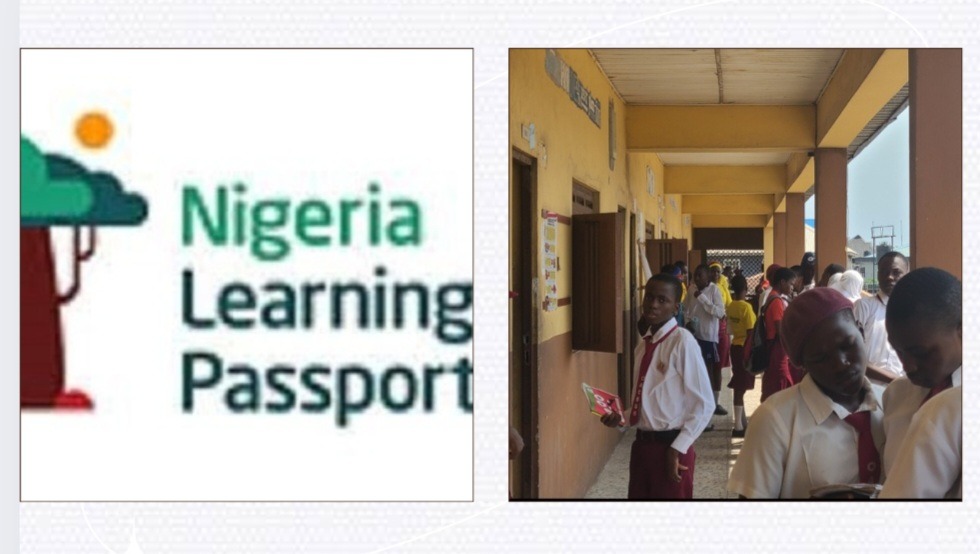

Three years after the Nigeria Learning Passport (NLP) was launched through a major technical collaboration with Microsoft, the digital platform is evolving faster than many educators expected.
Across the country, schools are still trying to understand and keep up with the platform’s full potential. But some are already sprinting ahead.
One such school is Okun-Ajah Community Senior Secondary School in Eti-Osa, Lagos, where the NLP is not only being actively used but integrated into broader artificial intelligence tools to enhance teaching and learning for more than 700 students.

According to the school’s principal, Oyedele Bridget, the Nigeria Learning Passport has “opened the school to the world,” especially through the “Passport to Earn” initiative. She explained that the school has seen an accelerated shift toward digitised learning, with students increasingly adapting to the new systems and exploring the platform’s interactive features.
However, despite the impressive progress, she noted that access to digital devices remains one of the biggest obstacles slowing student participation.
Her concerns were echoed by Lawal Segun, an ICT teacher with strong AI competence. Segun revealed that he often has to sacrifice his own time and even use his personal device to help students who lack the tools required to explore the NLP fully or complete internet-based assignments.
Another digitally savvy teacher, Lateef Adebowale, popularly known as “AI” among students, described himself as one of the pioneers implementing the “Passport to Earn” programme within the school. He said the initiative has triggered a “seismic shift in learning culture,” exposing students to new digital skills and more engaging educational experiences.
During a visit, UNICEF Education Specialist, Babagana Aminu, commended the school for embracing the digital innovations made possible by the NLP. He expressed hope that such early adoption would significantly strengthen digital skills among students and enhance the school’s learning outcomes.
He was particularly interested in how NLP’s implementation was shaping classroom engagement and learning behaviour.
The students themselves are already feeling the impact. SS3 student Ishiali Faith said she has been “awed” by the platform’s interactive features and how they open new areas of self-learning.

Also, an SS1 student, Ali-Eze Moses, who hails from Ebonyi State, said he currently accesses the Learning Passport only once a week, using his mother’s phone, for about 30 minutes. Despite the limited access, he is eager to increase his engagement so he can complete more courses and eventually earn his own digital passport.
Students who participate in the Passport to Earn (P2E) initiative must first complete designated courses on the platform before earning their certificates, a process many at the school say has made learning feel more rewarding and purposeful.
At Okun-Ajah Community Senior Secondary School, the Nigeria Learning Passport has become a gateway to a new educational culture, one that promises to prepare students for a more technologically driven future.