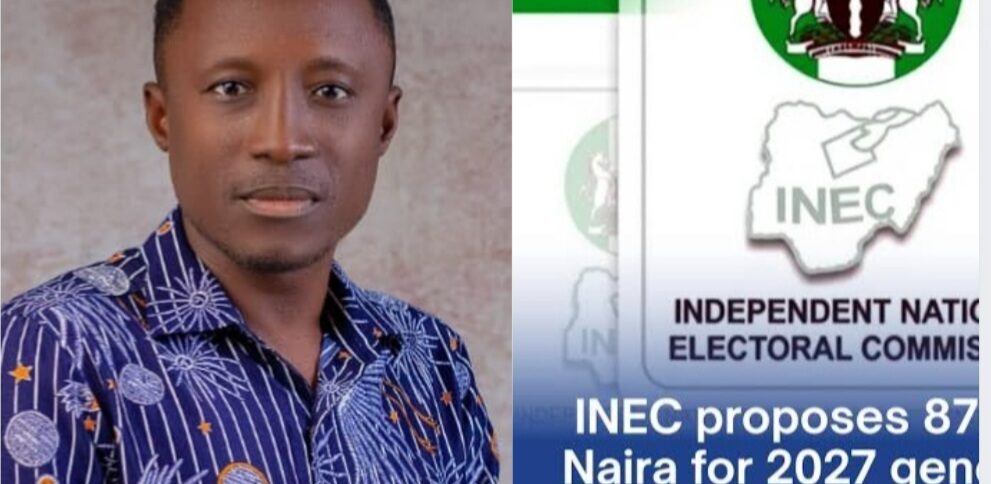

The Independent National Electoral Commission (INEC) may be heading for a collision course with constitutional provisions and public opinion over its proposal to shift the 2027 general elections and its staggering N874 billion budget request, an election expert has warned.
Dr. Zekeri Momoh, a Senior Lecturer in the Department of International Relations at Iconic Open University, raised the alarm during an appearance on the Adamimogo 105.1FM current affairs programme, Inside Scoop, on Monday in Abuja.
Momoh, who also serves as Executive Director of the Abuja-based transparency watchdog, Global Network for Advancement of Integrity Transparency and Accountability (GNAITA), and as a Regional Research Associate with the Indo-Pacific Studies Center (IPSC) in Australia, dissected the multiple controversies surrounding the nation’s preparedness for the 2027 polls.
The academic began by weighing in on the renewed debate over the age of Nigerian leadership, sparked by former President Goodluck Jonathan’s call for leaders between 25 and 50 years. While acknowledging the appeal of youthful energy, Momoh advocated for a merit-based approach to leadership recruitment.
“I will sit in between the fists,” he stated, arguing that both young and old have records of failure in Nigeria. He insisted that the nation’s focus must shift towards “the credibility and the capacity of that individual to deliver,” rather than arbitrary age restrictions.
The conversation, however, quickly pivoted to the most immediate political controversy: the proposed shifting of the 2027 election dates. The National Assembly is currently considering moving the polls from March to February 13, citing a clash with the Ramadan fasting period.
But Momoh sounded a loud cautionary note, warning of severe “constitutional complications” if lawmakers proceed without due diligence. He pointed to Section 28 of the Electoral Act, which mandates that INEC publish the election date at least 360 days beforehand, a timeline that a sudden shift would violate, potentially throwing the entire electoral calendar into legal turmoil.
While acknowledging the need for religious sensitivity, the don urged lawmakers to navigate the issue with extreme care to avoid a crisis. He called on the National Assembly to organise a public hearing, allowing for broad stakeholder input to strike a delicate balance between religious convenience and constitutional fidelity.
“In a nation already fraught with tension, any decision perceived as insensitive or legally dubious could have severe repercussions for the polity,” Momoh warned.
The bulk of the discussion, however, centred on the staggering financial implications of the 2027 polls. INEC is proposing a budget of N874 billion for the election, a figure that, when combined with the N171 billion 2026 fiscal proposal, pushes election-related spending past the N1 trillion mark.
This represents a massive leap from the N313 billion expended in 2023, triggering widespread public outcry and what Momoh described as a “pessimistic” sentiment among Nigerians already weary of unfulfilled promises by the electoral body.
Deconstructing the budget with surgical precision, the transparency advocate highlighted several items he found “outrageous” and in need of “serious investigation and profound scrutiny.” He drew attention to allocations such as N500 million for election retreats for staff, N7 billion for storage and logistics at the Central Bank of Nigeria, and N1.2 billion for vehicle repairs.
Most alarmingly, he zeroed in on N613 million budgeted for the medical check-ups of political officeholders and a staggering N41 billion set aside for “miscellaneous” expenses, which he described as a convenient sum for “all unforeseen circumstances.”
When pressed on whether the massive increase could be justified by inflation and new structural costs, Momoh conceded that both factors played a role. He acknowledged the need for funding to replace damaged voting cubicles (N18 billion), procure independent communication devices, and install solar lighting in INEC facilities.
However, he argued that the sheer scale of the figures, particularly in administrative and overhead costs, demands that the National Assembly’s joint committees on INEC perform a rigorous line-by-line scrutiny before granting approval.
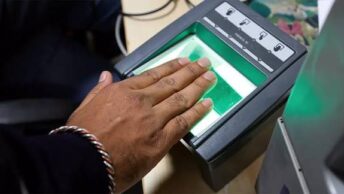
The discussion then turned to the future of electoral technology. With a significant portion of the budget, over N209 billion, earmarked for technological upgrades to address the glitches that plagued the 2023 elections, Momoh laid down a clear marker on performance expectations.
“If 209 billion plus is given to INEC, then it means INEC should not give any reason why they should not transmit the results electronically,” he declared, referencing the ongoing controversies surrounding the Result Viewing (IReV) portals and network issues in rural areas during the last general elections.
The conversation concluded on a critical note regarding accountability. Momoh was unequivocal that the buck must stop with INEC, arguing that with the resources requested to establish an independent communication network and a dedicated server, the commission would have no excuse for technical failures.
“INEC at the end of the day will be blamed for that,” he stated firmly. As the head of a transparency-focused NGO, he emphasised that the legislature, through its Senate and House committees on INEC, must serve as the ultimate check on the commission’s activities.
His analysis suggested that Nigerians are not just looking for promises, but for ironclad guarantees that the massive expenditure will translate into a seamless, credible, and transparent electoral process in 2027.
He stressed that any failure to deliver must be met with appropriate legislative and public accountability, warning that the credibility of the nation’s democracy may well depend on it.